Scientific studies and engineering developments are becoming increasingly sophisticated as companies deal with increasingly large data sets, simulations, and models. Traditional computer-based approaches usually fail to cope with these requirements, resulting in delayed discoveries and critical decisions. More computing capacity helps overcome this problem as it enables faster computations of complex equations and simulations, as well as the refinement of the results of simulation runs. Computing power is thus becoming an increasingly significant component of innovation in the modern industry.
1. Why Computing Power Matters in Research
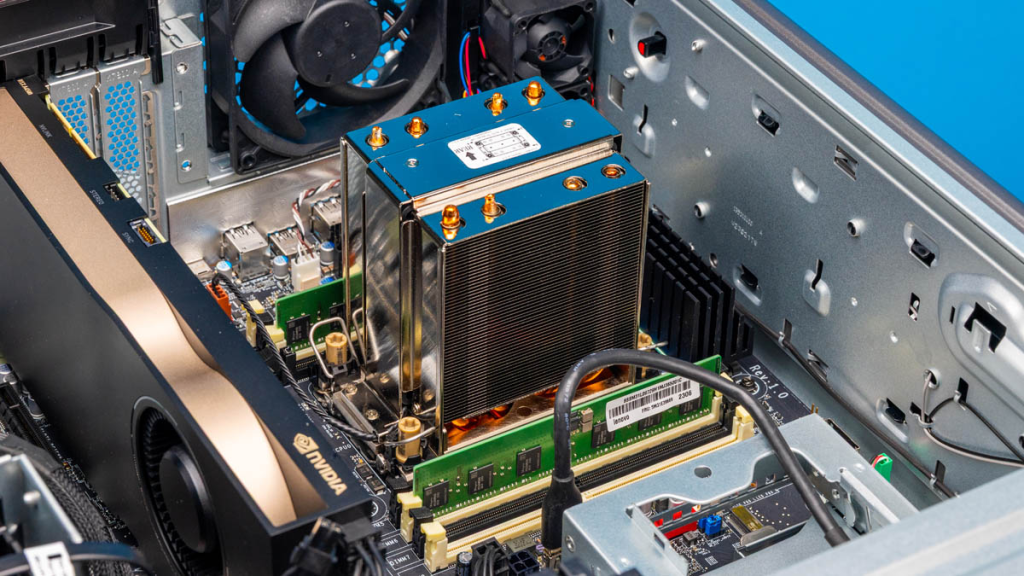
All research endeavors require efficient processing of information. From the simulation of weather models to the development of new substances or analysis of genomic information, the computer’s processing ability determines how fast the results will be derived. Companies with an Intel Xeon workstation for scientific computing are guaranteed efficient and stable processing capabilities that support complex calculations, large datasets, and continuous computing operations.
With more intricate research models, there is a need for much more computing power as well. With more computing power, it is possible to calculate bigger math problems, test various variables at once, and make accurate predictions.
2. Faster Processing Accelerates Simulation Workflows
Once the computational power becomes stronger, the simulation process becomes very efficient. No more would researchers have to wait for days or even weeks to receive their results to modify their models accordingly.
Highly complex simulations in areas like aerospace, automotive engineering, medicine, and energy need billions of calculations done to provide useful results. The powerful processors will accomplish these tasks more effectively, which means that several rounds of simulations will be possible within the same amount of time as a single round.
The time spent on processing is reduced, thus making the cost of development much lower.
3. Higher Computing Performance Improves Research Accuracy
Greater computing power does more than increase speed. It also improves the precision of research models by allowing simulations to use finer computational grids and more detailed calculations.
Increased resolutions yield more accurate outcomes since there will be more room to incorporate additional variables without being limited by the computational capabilities. Weather forecasting, structural analysis, medicine, and astronomy are just some areas that will reap the benefits of increased resolution.
Also, scientists can conduct various trials and run simulations through different conditions, which ensures consistency in the results.
4. Managing Massive Research Datasets Efficiently
Present-day studies are characterized by the generation of huge amounts of information. Sequencing the genome, particle physics experiments, satellite observations, and environmental studies result in huge datasets that surpass the capacities of traditional computer systems within a short period.
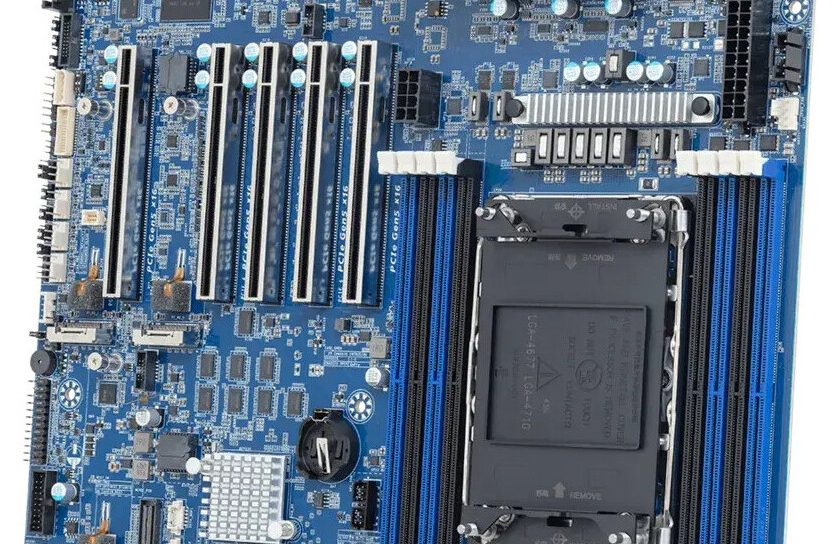
Effective processing of information presupposes both high-power processors and proper storage devices. A computer for scientific calculations and a Ryzen workstation provide the computational power required to work with complex datasets while running several programs at the same time.
Processing large amounts of information is helpful in collaboration because groups will be able to process their datasets faster and share insights with other departments.
5. Parallel Computing Solves Complex Problems Faster
Parallel computing is yet another innovation. Rather than making use of one processor to perform tasks in sequence, contemporary computing technology breaks down the processes into thousands of small jobs done at once.
Such an approach greatly reduces the amount of time needed to perform computations of fluid dynamics, molecules, seismics, finance, etc. Tasks that previously took months of nonstop calculations can now be performed within several days or even hours.
With parallel processing technology, researchers can run several sets of experiments at the same time.
6. AI Strengthens Simulation and Research Capabilities
In that respect, artificial intelligence has proved to be an invaluable ally in carrying out computation-based studies. The machine learning algorithm works on the outputs obtained from simulation, and then it recognizes any trends present and optimizes the parameters for future simulations.
Rather than spending time looking through the millions of data points and trying to make sense of them, AI makes the process much easier. It is also possible to apply AI in adaptive modeling, whereby a system learns from its previous computational results.
Moving Research Forward with Smarter Computing
As research evolves with increased computational requirements in all sciences, companies that make investments in scalable computer infrastructure have the advantage of being able to compute more data, create better simulations, and develop faster without compromising efficiency.
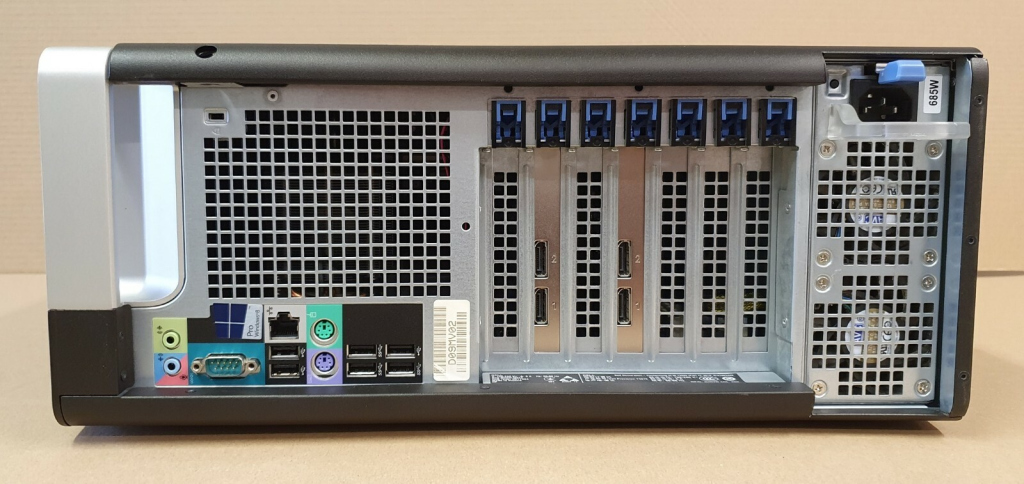
While companies like Dell Technologies and Lenovo provide suitable solutions to enterprises in terms of computer technology, Cloud Ninjas makes the extra effort to create customized computer solutions that are tailored specifically for scientific computation tasks. This customizable computer infrastructure concentrates on finding the right balance between processing speed, memory, and optimization of work processes. With continued increases in the complexity of simulations, choosing the right infrastructure is key to success.