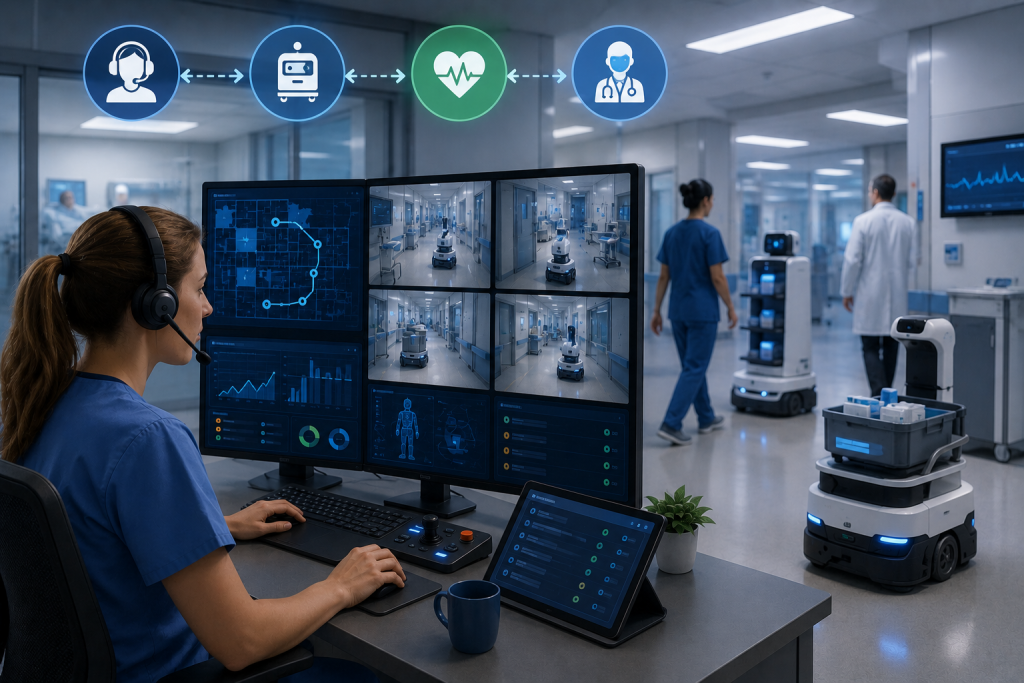
Healthcare organizations are increasingly adopting robotics technology to improve efficiency, reduce repetitive tasks, and support patient care. From delivering medications and transporting medical supplies to assisting staff with logistics, robots are becoming valuable assets in modern hospitals.
While autonomous robots can perform many tasks independently, healthcare environments are highly dynamic and often require human judgment. This is why hospitals frequently rely on human-in-the-loop robotics support. By combining robotic automation with remote human oversight, healthcare facilities can improve safety, reliability, and operational performance.
The Growing Role of Robotics in Healthcare
Hospitals face ongoing challenges such as staffing shortages, increasing patient demands, and operational complexity. Robotics technology helps healthcare organizations streamline routine activities while allowing medical professionals to focus on patient care.
Hospital robots are commonly used for:
- Delivering medications
- Transporting medical supplies
- Moving laboratory samples
- Supporting inventory management
- Assisting with logistics operations
- Guiding visitors and patients
These robotic systems help improve efficiency while reducing the workload on healthcare staff.
What Is Human-in-the-Loop Robotics?
Human-in-the-loop robotics refers to a system where autonomous robots operate independently but receive assistance from trained human operators when necessary.
Remote operators can:
- Monitor robot activity
- Review live camera feeds
- Analyze sensor data
- Respond to system alerts
- Assist with navigation challenges
- Escalate operational issues
This approach combines the efficiency of automation with the flexibility and decision-making capabilities of human oversight.
Why Hospitals Need Human Oversight
Hospital environments are constantly changing. Patients, visitors, staff, equipment, and emergencies can create unexpected obstacles for autonomous robots.
Even advanced robotic systems may encounter situations such as:
- Crowded hallways
- Blocked routes
- Elevator access challenges
- Unexpected obstacles
- Sensitive patient interactions
- Environmental changes
Human oversight ensures robots can continue operating effectively when they encounter situations beyond their programmed capabilities.
Enhancing Patient Safety
Patient safety is the highest priority in any healthcare environment. Robots operating in hospitals must navigate safely around patients, visitors, and medical personnel.
Human-in-the-loop support helps improve safety by allowing operators to:
- Monitor robot behavior in real time
- Respond to unusual situations
- Assist with navigation decisions
- Prevent operational errors
- Escalate concerns quickly
This additional layer of supervision helps reduce risks while maintaining reliable operations.
Supporting Reliable Robot Operations
Healthcare organizations depend on consistent performance from their robotic systems. Delays or operational interruptions can affect workflows and reduce efficiency.
Human-in-the-loop support helps hospitals:
- Minimize downtime
- Resolve navigation issues quickly
- Monitor robot performance continuously
- Maintain operational consistency
Reliable robot operations allow hospitals to maximize the benefits of automation.
Improving Workflow Efficiency
Robots often support essential hospital workflows by transporting supplies, delivering materials, and assisting with logistics tasks. Human monitoring ensures these processes continue without unnecessary interruptions.
Benefits include:
- Faster task completion
- Improved operational efficiency
- Reduced workload for hospital staff
- Better resource utilization
Healthcare teams can focus more on patient care while robots handle routine logistical activities.
Supporting Large-Scale Robotics Deployments
As healthcare organizations expand their use of robotics, managing multiple robots across different departments becomes increasingly complex.
Human-in-the-loop support enables centralized monitoring of multiple robotic systems, allowing operators to:
- Track robot activity
- Respond to alerts
- Manage operational issues
- Support multiple facilities
This scalability helps hospitals expand automation initiatives more effectively.
The Future of Robotics in Healthcare
Healthcare robotics continues to evolve, offering new opportunities to improve efficiency and patient services. However, human oversight remains an important component of successful deployments.
The combination of autonomous robots and remote human support allows hospitals to balance innovation with safety and reliability.
As robotic systems become more common in healthcare environments, human-in-the-loop operations will continue to play a key role in ensuring successful outcomes.
Why Healthcare Organizations Invest in Robot Teleoperation & Robot Monitoring
Many healthcare robotics companies and hospital operators utilize professional Robot Teleoperation & Robot Monitoring services to provide reliable human oversight for autonomous systems. Dedicated remote operators monitor robot activity, assist with navigation challenges, respond to alerts, and help maintain consistent robot performance in complex healthcare environments.
Professional monitoring services enable healthcare organizations to deploy robotics solutions with greater confidence while maintaining safety and operational reliability.
Conclusion
Hospitals use human-in-the-loop robotics support because healthcare environments require both automation and human judgment. While robots improve efficiency and reduce manual workloads, human operators provide the oversight needed to manage unexpected situations and maintain safe operations.
By combining robotic technology with professional Robot Teleoperation & Robot Monitoring services, healthcare organizations can improve reliability, enhance patient safety, and maximize the value of their robotics investments while supporting high-quality patient care.