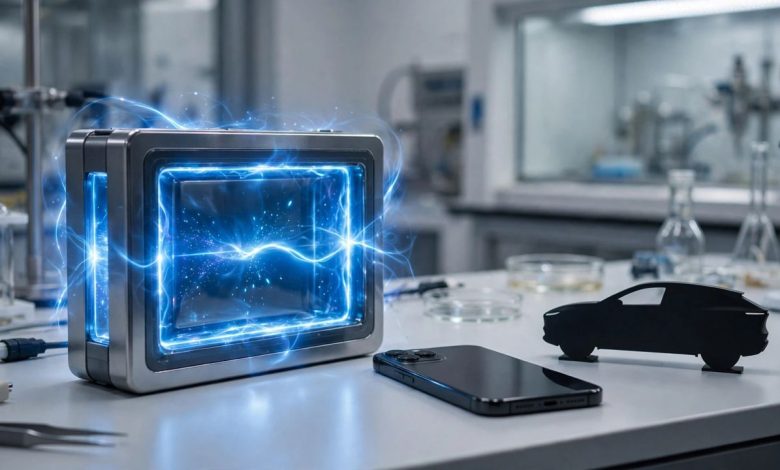
For more than a decade, solid-state batteries have been the technology that was always five years away. In 2026, that joke is finally expiring. The first consumer devices powered by solid-state cells are reaching shelves, pilot production lines for electric-vehicle packs are running, and energy companies are testing the chemistry for grid storage. It is a quiet milestone with loud consequences, because batteries sit underneath almost everything modern life runs on. Follow more breakthroughs like this in the tech coverage on TechHopes.
Why solid-state has been ‘five years away’ for so long
A conventional lithium-ion battery moves charged particles through a liquid electrolyte. A solid-state battery replaces that liquid with a solid ceramic or polymer layer. In theory, the swap is all upside: higher energy density, much lower fire risk, faster charging and longer life. In practice, the solid layer kept cracking, the interfaces between materials resisted ion flow, and manufacturing yields were dreadful. Making one perfect cell in a laboratory is a science project; making ten million identical cells on a factory line is an industry. The gap between those two achievements is where the decade went.
What finally changed
Three things converged. Materials scientists found solid electrolytes that stay stable against lithium metal, unlocking the density gains that justify the whole effort. Manufacturers borrowed dry-coating and stacking techniques from other industries, pushing yields to commercially survivable levels. And money arrived at scale: carmakers and consumer-electronics firms, facing slowing gains from conventional cells, funded pilot lines seriously rather than treating solid-state as a side bet. The result is not a sudden revolution but a genuine beginning — premium devices first, exactly the path lithium-ion itself once took. Research overviews from the U.S. Department of Energy and journals such as Nature chart how the underlying science matured to this point.
What it means for phones, cars and the grid
For phones and wearables, expect either noticeably longer battery life or thinner devices with the same life — manufacturers will split the difference both ways. For electric cars, the stakes are bigger: packs that store more energy per kilogram extend range, charge in minutes rather than tens of minutes, and remove much of the fire risk that complicates vehicle design. For the electricity grid, safer, longer-lived cells make it cheaper to store solar power for the evening and wind power for calm days, which is the missing piece in most renewable energy plans. Our homepage tracks how these technologies move from laboratories into everyday products.
The race is global and increasingly strategic. Japanese and Korean manufacturers moved early, Chinese producers are scaling aggressively on cost, and North American and European firms are answering with heavy investment in domestic pilot lines and partnerships. Governments now discuss battery supply chains in the language of energy security, because whoever manufactures the best cells shapes the economics of transport and power for decades. That geopolitical weight is another reason the technology’s arrival matters beyond the gadgets themselves: solid-state is becoming industrial policy, not just product design.
The challenges that remain
Cost is the honest caveat. Early solid-state cells are expensive, produced on pilot lines at premium prices, and the first products wearing them are flagship devices. Scaling to mass-market cars will take years of factory building. There are also open questions about performance in extreme cold and about recycling streams for new materials. None of this diminishes the milestone; it simply sets the timeline. Technologies cross from possible to inevitable long before they cross from premium to universal.
The bottom line
Solid-state batteries will not transform your life this quarter, but 2026 is the year they stopped being a promise and started being a product. The devices you buy in three to five years — the phone in your pocket, the car in your driveway, the battery backing up your home — will increasingly carry this chemistry inside. A decade of patience is about to compound.