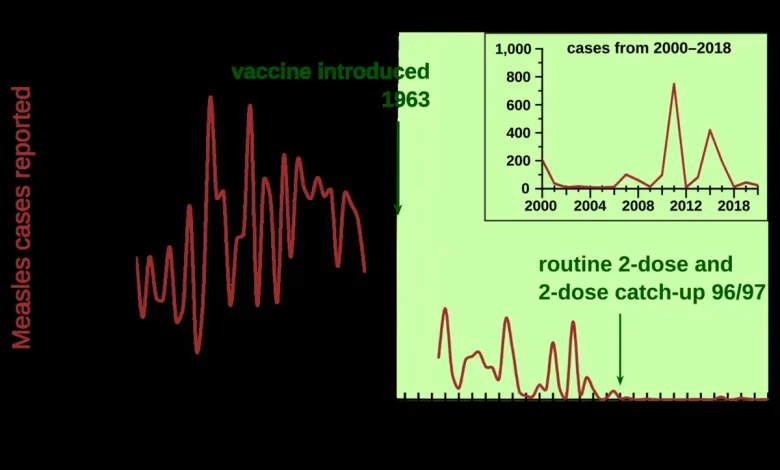
Another weekly increase has pushed the US measles total to 4,410 cases, a rise of 8 percent. The update has prompted renewed guidance for parents on symptoms and vaccination, with officials emphasising factual information and early action rather than alarm.
Explaining the 8 percent rise
Several factors are combining to push numbers upward. Vaccination coverage with the measles, mumps and rubella vaccine has slipped in some areas, in places falling below the roughly 95 percent level needed to prevent outbreaks. Cases linked to international travel can then seed local transmission in under-vaccinated communities. The Centers for Disease Control and Prevention measles pages explain how quickly the virus can spread through the air and linger in a room after an infected person has left.
Looking at the global picture offers useful context. Worldwide measles activity has increased since the pandemic disrupted routine immunisation in many countries, and the United States is not alone in recording higher totals. International health bodies argue that restoring childhood vaccination coverage to pre-pandemic levels is one of the most achievable goals in public health, requiring logistics and trust rather than new scientific breakthroughs.
Health technology is playing a quiet role in the response, with electronic record systems flagging children who have missed a dose and clinics sending reminder messages to parents. Officials say closing small gaps in coverage is the fastest way to slow the rise.
A guide to symptoms
Recognising measles early helps limit its spread. The illness often starts with fever, cough, a runny nose and inflamed eyes, followed within days by a blotchy red-brown rash that spreads downwards from the head. Most people recover with rest and fluids, but complications are not rare: ear infections and diarrhoea are relatively common, while pneumonia and brain inflammation occur in a small minority of cases and can be serious, particularly for babies and people with weakened immune systems.
Vaccination remains the answer
For anyone uncertain about their family’s protection, the steps are practical rather than daunting. Check vaccination records through a patient portal, school nurse or family doctor; book any missing MMR doses, which are widely available; and be alert to symptoms in the weeks after travel abroad. Because measles can spread before the rash appears, prompt reporting of suspected cases helps health teams trace contacts and offer post-exposure vaccination where appropriate.
Underneath the statistics sits a story about trust, which health officials say they must rebuild patiently rather than demand. Some parents have genuine questions about combining vaccines, about timing, or about what to do if a dose was missed years ago, and clinicians welcome those conversations. The evidence they can offer in return is extensive: the MMR vaccine has been studied in very large populations over many decades, its serious side effects are extremely rare, and the risks of the diseases it prevents are documented in every weekly report like this one. As cases reach 4,410, agencies are investing in exactly that kind of conversation, through longer appointments, community question sessions and clear written materials. Their expectation, based on previous rises that were successfully reversed, is that steady, respectful information plus easy access will do more than any headline to close the remaining gaps in coverage.
A factual summary
In summary, the data point to a preventable problem with a known solution. Cases grew because immunity gaps allowed a highly contagious virus to circulate, and they will fall when those gaps close. Until then, officials ask the public to rely on established sources such as the CDC, respond promptly to symptoms and keep routine immunisations up to date — measured steps that protect both individual families and the wider community.
Reminder apps, online booking and digital records are making catch-up easier than it used to be, and clinics report that small nudges often succeed where general announcements do not.
The figures will be revised as laboratories confirm or discount suspected cases, but the direction of travel is clear enough to act on. Staying current with MMR vaccination remains the simplest and most effective response available to every family.
For background on how vaccine science reaches patients, see our earlier coverage of vaccine research and early clinical trials, which explained how carefully staged studies build the evidence behind routine immunisation programmes.