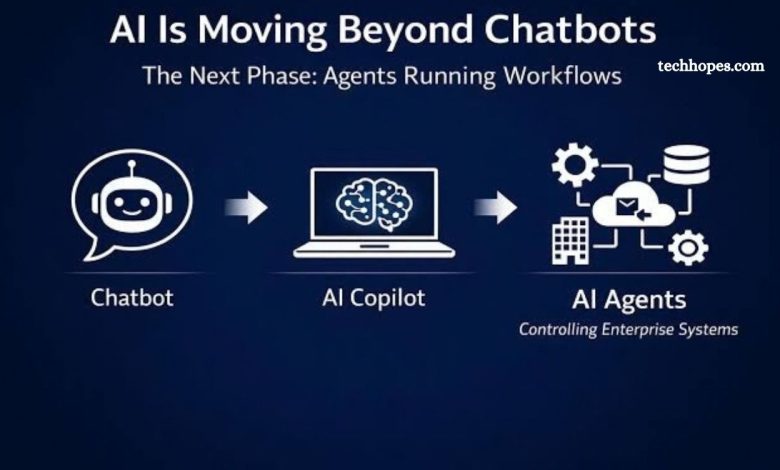
Artificial intelligence is entering a new phase as AI agents move beyond simple chatbot conversations and begin handling everyday digital tasks. Instead of only answering questions, modern AI agents can plan actions, use digital tools, manage information, and complete multi-step workflows with limited human input.
This shift is changing how people interact with technology. From organizing schedules and managing documents to researching information and assisting with business operations, AI agents are becoming practical digital assistants capable of completing tasks from start to finish.
Read More: QQ1221 and the Key Features Players Look for in Online Casinos
What Are AI Agents?
AI agents are software systems designed to understand a goal, make decisions, and take actions to achieve that goal. Traditional chatbots generally respond to user messages, while AI agents can perform several connected actions based on a single instruction.
For example, a chatbot might explain how to schedule a meeting. An AI agent could potentially check calendars, identify available times, prepare an invitation, and complete the scheduling process after receiving permission.
This ability to combine reasoning, planning, and tool usage makes AI agents different from conventional conversational AI. Their purpose is not simply to generate text but to help complete real digital workflows.
AI Agents Are Becoming More Action-Oriented
The biggest change in artificial intelligence is the movement from answering to doing. Users increasingly expect AI systems to take meaningful actions rather than provide instructions that require manual work afterward.
An AI agent could research several options, organize the findings, create a summary, and prepare the information for a final decision. In workplace environments, agents may also assist with repetitive administrative processes, data organization, customer support, and document management.
This does not mean AI agents should operate without supervision. Human approval remains important for sensitive decisions, financial activities, account changes, and other tasks where mistakes could create significant consequences.
Everyday Tasks AI Agents Can Handle
AI agents are particularly useful for repetitive digital activities that involve multiple steps. Managing emails is one example. Instead of simply drafting a response, an agent could identify important messages, summarize conversations, organize information, and prepare suggested replies.
Calendar management is another potential use. An agent can work with scheduling information to identify conflicts, suggest suitable meeting times, and help coordinate appointments.
AI agents can also assist with files and documents. They can help locate information, summarize lengthy documents, compare files, extract important details, and organize content according to user requirements.
AI Agents In Business Workflows
Businesses are among the biggest beneficiaries of agent-based artificial intelligence. Companies manage large numbers of repetitive digital processes, making automation particularly valuable.
AI agents can support areas such as customer service, sales research, marketing operations, internal documentation, data analysis, and employee assistance. Instead of requiring employees to complete every small step manually, agents can handle routine portions of a workflow.
For example, a sales agent could research a potential customer, organize publicly available information, prepare a brief report, and create a draft outreach message. Employees can then review the work and make the final decision.
This approach allows businesses to combine automation with human oversight instead of completely removing people from important processes.
The Rise of Multi-Step AI Workflows
One of the most important developments involves multi-step workflows. A traditional AI interaction often follows a simple pattern: user asks a question, AI generates an answer.
Agentic systems can follow a more complex process. They can interpret an objective, divide it into smaller tasks, use different tools, evaluate results, and continue working until the requested objective is completed.
This makes AI agents especially useful for tasks that require research, organization, and repeated actions. The technology effectively turns AI from a conversational interface into a digital worker capable of interacting with software environments.
AI Agents Can Connect Different Digital Tools
Modern digital work often requires switching between multiple applications. A person might check email, review a spreadsheet, search a database, update a project management system, and prepare a document during one workflow.
AI agents can potentially connect these activities. With appropriate permissions and integrations, an agent can move information between tools and coordinate multiple stages of a process.
This could reduce the amount of repetitive copy-and-paste work employees perform every day. It may also allow people to focus more on creative thinking, strategy, communication, and decision-making.
Personal AI Assistants Are Becoming More Capable
The consumer side of AI agents is also developing quickly. Personal AI systems are increasingly designed to understand preferences, remember useful context, and assist with everyday digital activities.
Future personal agents could help manage travel planning, organize digital files, compare products, prepare shopping lists, monitor schedules, and coordinate appointments.
The key difference is initiative. Instead of waiting for users to ask individual questions, an agent can work toward a broader objective and identify the steps required to achieve it.
Security And Privacy Remain Major Challenges
Greater autonomy also creates greater risks. An AI agent with access to email, files, financial information, or business systems can potentially cause serious problems if it makes an incorrect decision or receives a malicious instruction.
Security therefore becomes an essential part of agent development. Users need clear permission systems that define what an AI agent can access and which actions require approval.
Privacy is equally important. Organizations must understand what information agents can process, where that information goes, and how long it remains available. Strong authentication, access controls, monitoring, and human approval can help reduce potential risks.
Human Oversight Will Still Matter
AI agents may automate many digital tasks, but human involvement will remain important. AI systems can misunderstand instructions, make incorrect assumptions, or produce unreliable results.
The best approach is likely to involve collaboration between people and AI. Agents can handle repetitive work and prepare information, while humans provide judgment, creativity, accountability, and final approval.
This model could make technology more useful without giving AI unrestricted control over important decisions.
The Future Of AI Agents
AI agents are moving toward a future where users describe goals instead of manually explaining every individual step. Rather than saying which buttons to press or which applications to open, users may simply describe the desired outcome.
For businesses, this could transform software workflows and workplace productivity. For consumers, AI agents could become digital assistants capable of managing many routine responsibilities.
The technology is still developing, and challenges involving reliability, security, privacy, and accountability must be solved. However, the direction is clear: AI is gradually moving beyond conversations and toward practical task completion.
Frequently Asked Questions
What are AI agents?
AI agents are intelligent software systems that can understand goals, plan steps, use digital tools, and complete tasks with limited human input.
How are AI agents different from chatbots?
Chatbots mainly provide conversational responses, while AI agents can perform actions, use tools, and complete multi-step digital workflows.
What everyday tasks can AI agents perform?
AI agents can help manage emails, schedules, documents, research, data organization, customer support, and other repetitive digital activities.
Can AI agents improve workplace productivity?
Yes. AI agents can automate repetitive workflows, organize information, support employees, and reduce time spent on routine administrative tasks.
Are AI agents safe to use?
AI agents can be useful when properly controlled. Permissions, security measures, monitoring, and human approval help reduce potential risks.
Will AI agents replace human workers?
AI agents are more likely to automate specific tasks and support workers rather than completely replace humans across every role.
What is the future of AI agents?
AI agents are expected to become more capable of managing complex workflows, connecting digital tools, and completing everyday tasks based on user goals.
Conclusion
AI agents are changing the role of artificial intelligence by moving beyond simple conversations toward practical digital task completion. From managing emails and schedules to organizing documents and supporting business workflows, these systems can make everyday activities faster and more efficient.