Understanding Slot
Every modern slot game is built around a simple idea: you place a bet, spin the reels, and hope the symbols line up in a winning combination. Understanding how a slot works will not change any single spin, but it will help you choose games wisely and manage your bankroll.
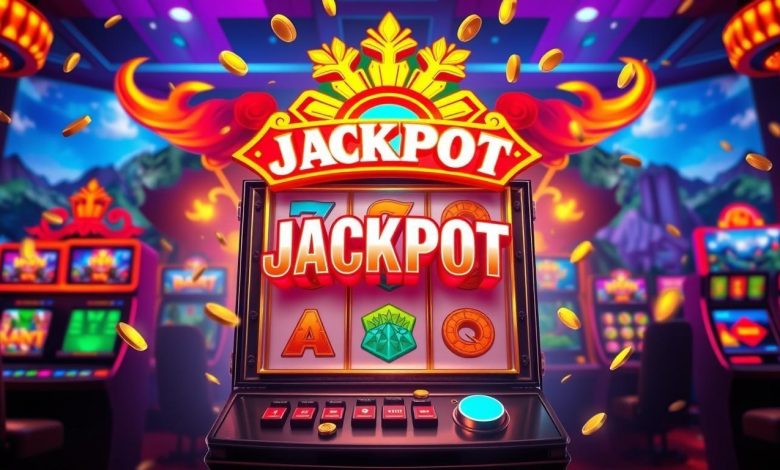
A typical online slot shows a grid of reels, usually five columns that spin vertically, each carrying a strip of symbols. When you press spin, the reels turn and stop one by one, revealing a new set of symbols on every slot position. The number of reels and rows decides how many symbols are visible at once, and most modern games use five reels with three or four rows, giving fifteen or twenty positions to fill.
How Slot Games Work
Symbols are the pictures that appear on the reels, and every slot game groups them into low-paying and high-paying sets. Low-paying symbols are often card values, while high-paying symbols are themed images. A win usually needs three or more matching symbols on a payline, and rarer symbols pay more because they appear less often.
Paylines are the fixed paths across the reels where matching symbols must land to create a win, and a classic slot might have ten, twenty or twenty-five of them. Many newer games use ways-to-win systems, where matching symbols on consecutive reels count as a win. Before you spin any slot machine, check the paytable to see how many lines are active and what each combination pays.
Wild symbols act like a joker in a deck of cards, substituting for most other symbols to complete a winning line. A wild on the middle reel can turn two matching symbols into three, and some games add expanding wilds that cover a whole reel, sticky wilds that stay in place for several spins, or walking wilds that move across the slot screen.
Choosing the Right Slot Game
Scatter symbols are special because they usually pay and trigger features no matter where they land, without needing to sit on a payline. Landing three or more scatters commonly starts a free spins round on a slot, and the scatter itself often pays a prize based on your total bet rather than a single line bet.
Bonus rounds are the feature events that sit on top of the base game, and they give a slot its personality. Free spins are the most common bonus, often with a multiplier that doubles or triples every win, while pick-and-click rounds ask you to choose objects that reveal cash prizes. Bonuses are where the biggest payouts usually hide.
Bonuses and Features to Look For
Every licensed online slot is driven by a random number generator, a computer program that produces thousands of random numbers every second, even while nobody is playing. When you press spin, the generator picks a number at that exact instant, and the game translates it into a set of reel positions. That means each slot spin is independent: the machine has no memory of your previous results, no hot or cold cycle, and no way to be due for a win after a losing run.
Return to player, usually written as RTP, is the theoretical percentage of all money wagered that a slot returns to players over millions of spins. A game with an RTP of 96 percent is expected to return 96 units for every 100 wagered in the very long run, although any single session can end far above or below that figure.
Volatility, also called variance, describes how a slot pays out over time, and it matters just as much as RTP. A low-volatility game delivers frequent small wins that keep your balance steady, while a high-volatility game pays rarely but can deliver much larger prizes when it does. Your choice should match your bankroll and temperament: a slot with high volatility needs a bigger budget and more patience, because long dry spells between wins are part of its design.
Playing Slot Responsibly
Bet sizing is one of the few things a player fully controls, and it shapes how long a session lasts on any slot game. Most games let you change the coin value and the number of coins per line, and your total bet is the product of those choices. Pick a stake that lets you survive at least a hundred spins, because bonus features are infrequent.
Payouts in a slot game are calculated from the paytable, which lists the prize for every symbol combination at your current bet level. A win on a single payline pays the listed amount multiplied by your line bet, and wins on several lines in the same spin are added together. The paytable also explains special rules, such as whether wins pay left to right only, whether scatters pay in any position, and what the maximum prize is, so reading it removes all guesswork about how a win was formed.
Final Thoughts on Slot
Progressive jackpots add another layer to how a slot pays, because a small slice of every bet across a network of machines feeds one growing prize pool. The jackpot keeps climbing until one lucky player hits the required combination or triggers the jackpot wheel, and then it resets to a seed value and starts growing again.
Mobile play has changed how people experience the slot, with touch controls, portrait layouts and quick-spin options replacing the old lever and buttons. The underlying mechanics are identical to desktop play, since the same random number generator and the same paytable drive the game, but the interface is simplified for smaller screens.
Understanding reels, symbols, paylines and RTP turns a confusing flashing screen into a game you can enjoy with open eyes. No strategy can beat the random number generator, so the smartest approach is to treat every slot session as entertainment, set a budget before you start, and stop when that budget is gone. If you would like to explore the topic further, you can visit slot for additional information and resources.