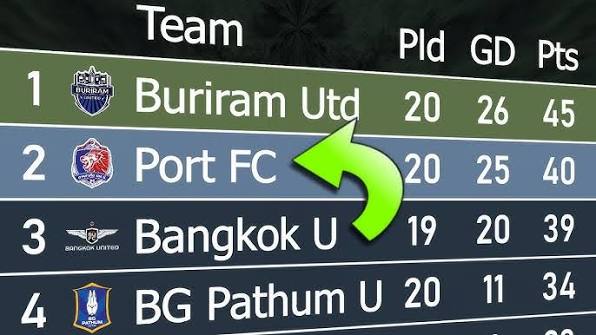
The 2023/2024 Thai League offered football at remarkable frequency, often with less than a week between fixtures. For casual fans, this meant non-stop entertainment, but for analysts and bettors, it created a distinct set of predictive challenges. Fixture congestion reshaped the physical, tactical, and emotional profiles of teams—changing the way match probabilities behaved and making pre-match assessments more dynamic than ever before.
Why Fixture Congestion Alters Betting Predictability
Short recovery intervals erode both physical stability and tactical discipline. As players face reduced rest between games, passing precision, sprint recovery, and concentration decline. These effects distort expected goal models (xG) and disrupt managerial tactics that depend on peak conditioning.
From a betting perspective, fixture density increases performance volatility. A side dominant on paper can appear sluggish, translating into flatter pressing shapes, weaker finishing, and more frequent defensive mistakes. This volatility introduces both risk and hidden opportunity for bettors capable of quantifying fatigue correctly.
Identifying When Congestion Begins to Affect Results
The threshold of negative impact usually emerges when a team plays three matches within seven to eight days. Analysts can confirm this through observable indicators—noticeable drop in acceleration metrics, lower shot efficiency, and rising concession probability after the 70th minute.
Teams without depth—especially those reliant on foreign attackers—display stark decline once rotation begins compromising chemistry. Fixture compression amplifies these inefficiencies, turning strong favorites into unpredictable performers.
| Indicator | Description | Betting Interpretation |
| Frequent lineup rotation | Core players benched midweek | Reduced chemistry, uncertain synergy |
| Drop in second-half xG | Physical decline beyond 60 minutes | Under goals or late collapses possible |
| Player fatigue quotes | Manager hinting at rest priority | Reduced intensity forecast |
| Recovery under 4 days | Chronic fixture intervals | Elevated draw and upset probability |
For bettors, these indicators act as early predictors that odds no longer align with assumed performance capabilities.
The Statistical Signature of Fatigue
Data from past Thai League seasons shows a consistent pattern under fixture congestion: the total match goal average drops by approximately 0.3–0.5 goals per game. Defensive organizations may weaken, but attacking efficiency collapses faster. Teams rely on conservative tempo rather than pressing transitions, leading to fewer chances, slower sequences, and wider betting variance.
Comparative Scenarios Between Normal and Tight Schedules
- Standard Interval (5+ days): higher pattern uniformity, tactical order maintained.
- Compressed Interval (<4 days): erratic flows, unpredictable tempo, higher variance in goal output.
Recognizing how a betting line reflects this shift—rather than reacting emotionally to team names—transforms prediction into controlled expectation.
Adjusting Market Strategy Under Frequent Play
In congested weeks, bettors must prioritize squad depth over form streaks. Evaluating rotation order, substitution trends, and recovery data becomes essential. When goal markets fail to adjust, under totals often represent value. Similarly, first-half wagers carry improved risk control since fatigue mostly manifests later in matches.
During these phases, data-focused participants increasingly rely on analytical ecosystems such as ufa168 แจกเครดิตฟรี, a sports betting service where real-time injury notes, rotation forecasts, and live statistical feeds integrate for contextual decision-making. This access allows bettors to align wagers not purely on odds gaps, but on physical sustainability indicators—a key progression from speculation toward evidence-based judgment.
Tactical Adjustments Influenced by Schedule Density
Managers respond pragmatically when facing compressed timetables. Tactical patterns evolve from fluid attacking football into risk-minimized containment. Defenders stay deeper, wingers conserve energy, and pressing intensity dips. Consequently, overall xG variability narrows. Teams that excel in positional flexibility—like Buriram United—can navigate these conditions better than system-dependent sides, giving them greater betting resilience across congested phases.
Psychological Impact of Overloaded Fixtures
Cumulative fatigue extends beyond physiology. Mentally drained squads demonstrate shortened focus windows, leading to careless challenges and late-game lapses. Emotional equilibrium decays as losses mount under exhaustion, producing negative feedback loops that alter motivation. In predicting results, emotional fatigue often precedes statistical regression—a sign that betting lines may overestimate traditional form.
Interpreting Odds When Congestion Is Mispriced
Markets rarely recalibrate instantly to fatigue-driven tendencies. When bookmakers underestimate recovery constraints, bettors encounter mispriced odds offering latent value in unders, draws, or contrarian selections. The skill lies in spotting schedule compression before the market fully adjusts—a process built on observation and timing precision.
In broader analytical frameworks, one can spot parallels across strategically timed environments—for instance, discussions surrounding variance pacing within casino online settings illustrate how probability cycles tighten under constrained intervals. Both domains reward anticipation of exhaustion and timing discipline, reinforcing that overexposure—whether athletic or statistical—eventually reduces efficiency.
Dynamic Failures from Ignoring Schedule Strain
Ignoring fixture impact commonly leads to recurring betting errors: overvaluing dominant teams during fatigue periods, misinterpreting poor finishing as tactical failure, and repeating bets on strength without acknowledging rotation signals. These cognitive traps stem from linear thinking in a context where recovery introduces non-linearity. Quantitative awareness stabilizes judgement against such distortions.
Summary
The congested Thai League 2023/2024 schedule fundamentally reshaped betting logic. Physical strain, tactical conservatism, and emotional fatigue merged into a single volatility engine influencing match rhythm and scoring probability. Bettors who integrated schedule analytics, rotation awareness, and fatigue markers gained measurable advantage. Predicting outcomes under fixture congestion was less about form and more about endurance—proof that real betting intelligence lies in reading human limits, not just evaluating team names.