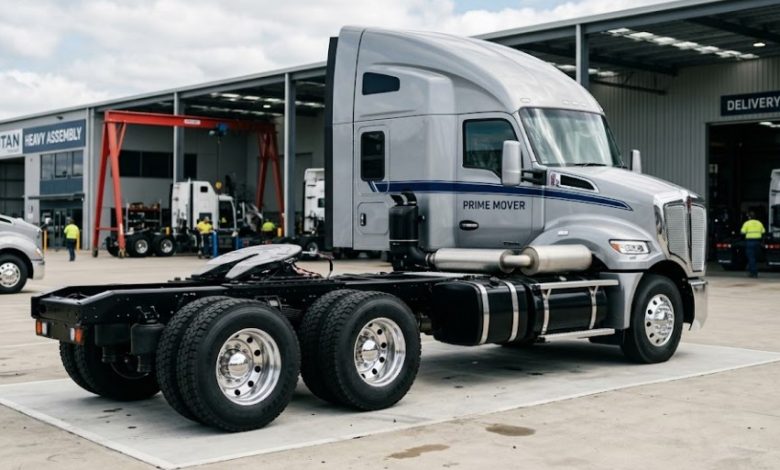
If you need a commercial vehicle that works the way your business works, rather than forcing you to adapt to a fixed factory configuration, a cab chassis is almost certainly where your search begins.
A cab chassis is a truck or vehicle delivered with just the cab and the bare frame rails behind it. There is no factory-fitted tray, body, or cargo area. Instead, the buyer selects and fits the body type that suits their specific application, whether that is a tipper for earthmoving, a pantech for furniture removals, a service body for a plumbing business, a refrigerated unit for food transport, a flatbed tray for building supplies, or any one of dozens of other configurations.
This flexibility is what makes the cab chassis the backbone of Australian commercial transport. From sole traders running a single truck to national fleet operators managing hundreds of vehicles, the cab chassis format allows businesses to build exactly what they need on a proven, purpose-designed platform.
But that flexibility also makes the buying process more complex than purchasing a ready-made vehicle. You are not just choosing a truck. You are choosing a platform, an engine, a transmission, a body builder, and a configuration that will define your productivity and profitability for years to come. Get it right and you have an asset that earns its keep every day. Get it wrong and you are stuck with a vehicle that does not quite fit, costs more to run than it should, and limits what your business can do.
This guide covers every aspect of the buying decision: understanding the different weight classes and configurations, matching specifications to your operation, evaluating new versus used, choosing a body builder, navigating finance and compliance, and calculating the true cost of ownership.
Understanding the Cab Chassis Market and What Is Available
The Australian commercial vehicle market offers cab chassis options across the full weight spectrum, from light-duty models suitable for urban delivery through to heavy-duty platforms built for interstate haulage and resource sector work. Understanding where your needs sit within this spectrum is the first step in narrowing your options.
Light-Duty Cab Chassis
Light-duty cab chassis trucks typically have a Gross Vehicle Mass of up to around 8 tonnes. They are the workhorse of urban and suburban commercial operations across Australia. Tradespeople, landscapers, small freight operators, food distributors, and service businesses make up a large portion of the buyer market in this segment.
Popular configurations for light-duty cab chassis include service bodies with integrated toolboxes and storage for trades such as plumbing, electrical, and HVAC. Tray bodies with drop sides for building material delivery and general cartage. Pantech bodies for removals, courier work, and general freight. Refrigerated bodies for cold chain distribution. Tipper bodies for landscaping, small earthworks, and waste collection.
Light-duty models are available in both cab-over and conventional cab layouts. Cab-over designs, where the cab sits above or forward of the engine, offer a shorter overall vehicle length for the same body size, which is a significant advantage in tight urban environments. Conventional cab layouts provide more comfortable cab proportions and easier engine access for maintenance.
Automatic transmissions have become the standard in this segment, reducing driver fatigue and broadening the pool of available drivers. Many light-duty cab chassis now come equipped with safety features including electronic stability control, autonomous emergency braking, and reversing cameras, which are increasingly expected by fleet managers and required by workplace health and safety policies.
Medium-Duty Cab Chassis
Medium-duty cab chassis trucks, with GVMs typically ranging from 8 to 16 tonnes, bridge the gap between light urban vehicles and heavy-duty highway trucks. They serve applications that require more payload, a longer body, or greater towing capacity than a light-duty can provide, but do not demand the size and investment of a heavy-duty platform.
Common medium-duty applications include larger tippers for civil construction and demolition, curtainsider bodies for distribution and linehaul, crane trucks for construction material delivery, vacuum trucks for industrial cleaning, and larger refrigerated bodies for food distribution across metropolitan and regional routes.
Medium-duty cab chassis often offer a choice between manual and automatic transmissions. Engine outputs typically range from 180 to 300 horsepower, and many models now comply with Euro 6 emission standards under ADR 80/04. For operators who need to step up from a light-duty vehicle but are not ready for the complexity and cost of a heavy-duty truck, the medium-duty segment offers a practical middle ground.
Heavy-Duty Cab Chassis
Heavy-duty cab chassis trucks, with GVMs above 16 tonnes, are the foundation of long-haul freight, mining support, heavy construction, and infrastructure operations across Australia. These platforms carry the largest payloads, pull the heaviest trailers, and endure the most demanding operating conditions the country can throw at them.
In the cab chassis format, heavy-duty models are commonly specified for tippers and body trucks rather than prime mover configurations, though the same underlying platforms often serve both roles. A heavy-duty cab chassis might be fitted with a large-capacity tipper body for quarry or mine site work, a hook-lift system that allows a single truck to swap between different body types, a water cart for dust suppression, a concrete agitator, or a heavy-duty service body for remote area maintenance operations.
Heavy-duty cab chassis typically feature engine outputs from 300 to over 600 horsepower, with torque figures to match. Automated manual transmissions are increasingly common, though fully manual gearboxes remain popular in certain applications. Air suspension, electronically controlled braking, and advanced driver assistance systems are standard on many current models.
How to Match the Right Specifications to Your Operation
Choosing the correct specifications is the most technical part of the buying process, and it is also where the biggest mistakes are made. Overspecifying wastes capital and increases running costs. Underspecifying leads to overloading, accelerated wear, compliance issues, and potentially dangerous operating conditions.
Gross Vehicle Mass and Payload
The GVM is the maximum legal weight of the loaded truck, including the cab, chassis, body, fuel, driver, passengers, and cargo. The tare weight is the weight of the truck itself, including the cab, chassis, and any fitted body but excluding the payload. The difference between GVM and tare weight is your available payload.
This calculation is critical. A cab chassis with a high GVM but also a high tare weight may not offer any more payload than a lighter vehicle with a lower GVM. Always work from payload requirements backward to determine the appropriate GVM, and factor in the weight of the body you intend to fit. Body weight can vary significantly depending on the type, materials, and features specified.
For example, a steel tipper body will weigh considerably more than an aluminium tray of similar dimensions. If payload is a priority, investing in lighter body construction may deliver a better return than choosing a larger truck.
Engine Power and Torque
The engine needs to be matched to the weight of the loaded vehicle, the terrain it will operate on, and the type of work it will perform. A truck that spends its life on flat metropolitan roads delivering palletised freight has very different power requirements from one hauling a loaded tipper up and down steep construction site access roads or towing a trailer through the ranges.
Underpowered trucks work harder, consume more fuel, wear out faster, and frustrate drivers. Overpowered trucks cost more to purchase, may consume more fuel at light loads, and represent capital that could have been better deployed elsewhere.
Torque is often more important than raw horsepower for commercial applications. A strong, flat torque curve that delivers pulling power across a broad range of engine speeds makes a truck more versatile and more pleasant to drive under load.
Wheelbase and Frame Length
The wheelbase, which is the distance between the front and rear axles, directly determines the maximum body length that can be fitted. It also affects the vehicle’s turning circle, ride quality, and weight distribution.
A longer wheelbase allows a longer body, which increases cargo volume and can improve load stability. However, a longer wheelbase also increases the turning circle, which can be problematic in urban environments, construction sites, or anywhere space is tight.
Conversely, a shorter wheelbase improves manoeuvrability but limits body length. For some applications, a shorter body with a higher capacity, such as a deeper tipper, may be the better solution.
Frame rail depth and section modulus are also important specifications, particularly for heavy-duty applications. The chassis rails must be strong enough to support the body and payload without excessive flex, which can cause body cracking, alignment issues, and premature structural fatigue.
Axle Configuration
The axle configuration determines the number of axles, their position, and which are driven. Common configurations for cab chassis trucks include 4×2, which is a single rear axle with rear-wheel drive and is the most common configuration for light and medium-duty applications. 6×4 features twin rear axles with both driven, providing increased payload capacity and traction for heavy-duty applications. 6×2 has twin rear axles with only one driven, offering increased payload at lower cost and weight than a 6×4. 8×4 features three rear axles with two driven, used for maximum payload applications such as large tippers and concrete agitators.
Each configuration has implications for payload, traction, tyre costs, turning circle, and road user charges. The right choice depends on your specific application and the regulations that apply to the roads you will operate on.
Cab Type
Cab chassis trucks are available in single cab, crew cab, and in some cases, extended cab configurations. Single cab models offer maximum body length for a given wheelbase and are the standard choice for most commercial applications. Crew cab models provide seating for additional passengers, making them suitable for operations where crews need to travel together, such as construction, landscaping, and emergency services.
The cab layout, whether cab-over or conventional, also affects forward visibility, engine access, ride quality, and overall vehicle length. Cab-over designs dominate the medium and heavy-duty segments in Australia, while both layouts are common in the light-duty market.
Choosing the Right Body for Your Cab Chassis
The body is what transforms a bare cab chassis into a working vehicle. The choice of body type, material, builder, and specification is every bit as important as the choice of the underlying truck.
Body Types and Applications
The range of body types available for cab chassis trucks is extensive. Tray bodies, both flat and with drop sides, are versatile platforms for general cartage, building material delivery, and trades work. Tipper bodies allow hydraulic tipping of loose materials and are essential for construction, earthmoving, landscaping, and waste management. Pantech bodies provide enclosed cargo space for furniture removals, courier operations, and general freight. Curtainsider bodies combine the load security of an enclosed body with the access convenience of side-opening curtains. Refrigerated bodies maintain temperature-controlled environments for food, pharmaceutical, and chemical transport. Service bodies integrate toolboxes, storage compartments, and workbench space for trades and maintenance operations.
Selecting a Body Builder
The quality of the body fitted to your cab chassis directly affects the vehicle’s durability, functionality, safety, and resale value. When evaluating body builders, consider their experience with your specific application, the materials they use such as steel, aluminium, or composite, the quality of their engineering and fabrication, whether they hold relevant certifications and comply with Australian Standards, the warranty they offer on the body separately from the chassis, and their track record with other operators in similar applications.
A poorly built body can cause structural problems, weight issues, safety hazards, and costly downtime. Investing in a quality body builder is not a place to cut corners.
Weight, Compliance, and Engineering Certification
Any body fitted to a cab chassis must comply with relevant Australian Design Rules and state or territory regulations. The completed vehicle must remain within its rated GVM and axle load limits. Depending on the body type and modifications involved, an engineering certification from a qualified automotive engineer may be required.
Weight distribution is a critical factor. The body, equipment, and payload must be distributed across the axles so that no individual axle exceeds its rated capacity. Poor weight distribution can cause handling problems, premature tyre wear, suspension damage, and non-compliance with road regulations.
Your body builder should be able to provide weight calculations and, where required, engineering certification before the completed vehicle goes into service.
New Versus Used: Making the Right Call
The new-versus-used decision for a cab chassis follows similar logic to any commercial vehicle purchase, but there are some specific considerations.
A new cab chassis gives you the latest emission compliance, safety technology, and warranty coverage. You can specify the exact configuration you need and have the body fitted to a fresh platform with no prior stress or wear. For applications where uptime is critical and the vehicle will accumulate high annual kilometres, new is often the most cost-effective choice over the full ownership period.
A used cab chassis can offer significant capital savings, particularly for operations with moderate utilisation, harsh working environments where cosmetic condition is less important, or situations where a proven, older model suits the application just as well as the latest release. When buying used, pay particular attention to the condition of the chassis rails for any signs of cracking, corrosion, or repair. The chassis is the structural foundation of everything built on top of it, and compromised rails can create serious safety issues.
If you are looking for current cab chassis stock in WA, exploring what is available locally gives you a practical starting point to compare configurations, pricing, and specifications.
For buyers who want near-new condition at a reduced price, demonstrator models, cancelled orders, and low-kilometre ex-lease vehicles can represent excellent value.
Finance, Tax, and Total Cost of Ownership
A cab chassis purchase is a major capital decision, and the way you structure the acquisition has lasting implications for your cash flow and tax position.
Financing Options
The most common financing structures for cab chassis purchases in Australia include chattel mortgage, where you own the vehicle from settlement and the lender takes a security interest. Finance lease, where the lender owns the vehicle and leases it to you. Operating lease, which functions like a long-term rental and may include maintenance. Hire purchase, where you hire the vehicle with an option to purchase at the end of the agreement. And outright purchase using cash or a business loan.
Each structure has different implications for GST, depreciation, interest deductions, and balance sheet treatment. The right choice depends on your business structure, cash flow, and tax position. Engage your accountant before committing to a financing arrangement.
The Australian Government’s permanent $20,000 instant asset write-off threshold may apply for eligible small businesses. Confirm the current rules and your eligibility with your tax adviser.
Calculating Total Cost of Ownership
The purchase price is just the beginning. Total cost of ownership includes fuel, which typically represents 30 to 40 per cent of total operating costs. Maintenance and repairs, including scheduled servicing, consumables, and unplanned breakdowns. Insurance premiums. Registration and road user charges. Tyres. Body maintenance and repairs, which are separate from the chassis. And depreciation, which determines your eventual resale value.
Comparing total cost of ownership between two or more options provides a far more accurate picture of value than comparing purchase prices alone. A truck that costs $15,000 more to buy but saves $5,000 per year in fuel and maintenance will be cheaper to own over a five-year period.
Compliance and Regulatory Requirements
Every cab chassis operating on Australian roads must comply with a framework of regulations covering emissions, safety, mass limits, and driver obligations.
Australian Design Rules set the national standards for vehicle safety and emissions. The ongoing transition to ADR 80/04, which aligns Australian emission standards with Euro 6, affects the models available in the market and may influence the long-term viability and resale value of older, pre-Euro 6 vehicles.
The National Heavy Vehicle Regulator administers the Heavy Vehicle National Law in participating jurisdictions. Western Australia is transitioning to this framework, which includes chain of responsibility obligations that extend beyond the driver and operator to everyone in the transport supply chain.
Mass and dimension regulations govern the maximum weight and size of vehicles on Australian roads. These limits vary by road classification, axle configuration, and vehicle type. Operating above legal mass limits is a serious offence that can result in significant fines, vehicle grounding, and prosecution.
For modified or purpose-built vehicles, additional engineering certification and compliance requirements may apply. Ensure your body builder and any modification specialists are familiar with the relevant standards and can provide the necessary documentation.
Practical Tips for Getting the Best Outcome
Before you start looking at specific vehicles, define your requirements in detail. Document what you will carry, how much it weighs, where you will take it, how far you will drive each day, and what body type you need. The more specific you are, the better your chances of selecting the right platform.
Visit multiple suppliers and request detailed specifications, not just brochures. Compare the tare weights, payload capacities, standard inclusions, and warranty terms of competing models side by side.
Talk to other operators running similar trucks in similar applications. Real-world feedback on fuel consumption, reliability, driver comfort, and parts availability is more valuable than any sales presentation.
Factor in the cost and lead time for body building. A cab chassis purchase is only half the equation. The body builder needs time to design, fabricate, and fit the body, and this can add weeks or months to your delivery timeline. Plan ahead to avoid gaps in your fleet capacity.
Arrange insurance quotes before you finalise the purchase. Premiums vary significantly between insurers and between vehicle types, and an unexpected insurance cost can blow your budget.
Inspect the service and parts support network for any brand you are considering. The best truck in the world becomes a liability if you cannot get parts or qualified service in the areas where you operate. This is particularly important in regional and remote Western Australia, where the nearest service facility may be hundreds of kilometres away.
Frequently Asked Questions
What exactly is a cab chassis truck?
A cab chassis is a commercial vehicle delivered with the driver’s cab and the bare structural frame, but without a factory-fitted body or cargo area. The buyer then selects and fits a purpose-built body such as a tray, tipper, pantech, refrigerated unit, service body, or other configuration suited to their specific application. This format gives businesses the flexibility to build a vehicle that matches their operational requirements precisely, rather than adapting to a fixed factory configuration.
How do I determine the right GVM for my cab chassis?
Start with the maximum payload you need to carry and work backward. Add the weight of the body you intend to fit, the weight of fuel, the driver, and any onboard equipment. The sum of all these weights determines the minimum GVM you require. It is advisable to allow a margin above your calculated minimum to accommodate occasional heavier loads and to avoid operating at the absolute limit of the vehicle’s capacity. Your supplier and body builder can assist with detailed weight calculations.
Can I fit any body type to any cab chassis?
Not necessarily. The body type must be compatible with the chassis dimensions, frame strength, axle ratings, and overall vehicle specifications. A heavy tipper body, for example, requires a chassis with sufficient frame strength and appropriate axle ratings to handle the loaded weight and the dynamic forces of tipping. Your body builder and the truck supplier should work together to ensure the combination is safe, compliant, and within the manufacturer’s rated capacities. Engineering certification may be required for certain body and chassis combinations.
What should I look for when buying a used cab chassis?
The most critical areas to inspect are the chassis rails for cracks, corrosion, or evidence of repair. Also check the engine and transmission condition, brake components, suspension, and the overall structural integrity of the cab. Review the full service history and verify the odometer reading against service records. Run a Personal Property Securities Register search to check for any financial encumbrances. If a body is already fitted, inspect the body mounting, structural integrity, and condition of any hydraulic or mechanical systems. A pre-purchase inspection by a qualified heavy vehicle mechanic is strongly recommended.
How long does it take to get a new cab chassis with a fitted body?
Lead times vary depending on the truck brand and model availability, the body builder’s workload, and the complexity of the body being fitted. As a general guide, the cab chassis itself may take anywhere from immediate availability for in-stock models to several months for factory-ordered specifications. Body building can add four to twelve weeks or more depending on the type and complexity. For specialised or custom bodies, lead times may be longer. Planning well ahead of your required delivery date helps avoid costly delays and ensures you get the specifications you need.
This guide is intended for informational purposes only. Commercial vehicle buyers in Australia should always seek independent professional advice regarding financing, insurance, regulatory compliance, and vehicle suitability before making a purchase decision.