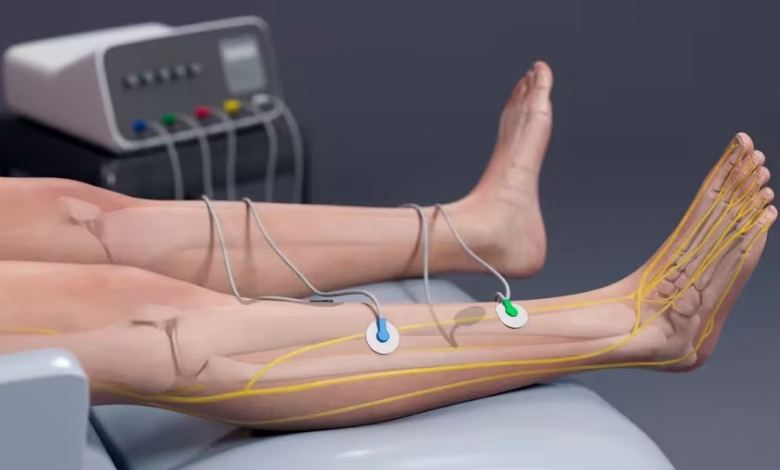
Foot and leg wounds can be stressful for anyone. They affect how you move, how you feel, and how independent you can be day to day. Years ago, treatment options were limited, and healing often took much longer than people expected. Today, things look very different. Thanks to major advances in medical technology, wound care has become faster, safer, and much more precise. Modern tools now give patients real hope for quicker recovery and better long-term outcomes. Clinics like Gelbmann Podiatry use many of these technologies every day, which means patients benefit from approaches that are both highly effective and gentle on the body.
Modern wound care focuses on identifying the problem early, treating it from multiple angles, and using tools that support the body’s own healing process. Whether someone is dealing with a sports injury, a chronic wound, or a sudden cut or blister that has become more serious, today’s technology allows providers to treat issues with greater accuracy and less discomfort.
Why Technology Matters in Wound Care
Foot and leg wounds can be difficult for the body to heal. The skin in these areas experiences pressure and friction every day. Blood flow can be more limited, especially for people with diabetes, circulation issues, or a history of injuries. When a wound is not treated properly, it can slow down recovery or lead to more serious complications.
Modern technology helps solve these challenges by doing three important things. First, it improves diagnosis, making it easier to understand what is happening under the surface. Second, it speeds up healing by stimulating the body’s natural repair processes. Third, it protects the wound and reduces the risk of infection while healing takes place. This combination results in fewer setbacks and a smoother path back to normal movement.
Digital X-Ray and the Power of a Clearer Diagnosis
One of the biggest shifts in wound care has come from digital X-ray technology. Traditional X-rays were useful but limited. Images took time to develop, and it was harder to detect small details that could influence treatment. Digital X-rays, by contrast, provide instant, high-resolution images that reveal changes in bone, joint alignment, and soft tissue.
For patients with foot and leg wounds, this matters more than most people realize. Many wound issues begin because of underlying bone problems. A small misalignment, stress fracture, or hidden infection can make healing more difficult. With digital X-ray imaging, providers can analyze the full picture within seconds and build a treatment plan that supports healing from the inside out. Clinics like Gelbmann Podiatry rely on this level of accuracy to make sure there are no surprises that slow recovery.
Swift Microwave Therapy and the Rise of Targeted Energy Treatment
Another breakthrough in modern wound care is the use of focused energy treatments. One of the most innovative tools available today is Swift microwave therapy. Although Swift is most known for treating stubborn skin lesions, its underlying science has opened the door to new approaches in wound care. The technology uses precise microwave energy to stimulate the immune system and encourage rapid tissue repair.
What makes microwave therapy so promising is its ability to activate healing without breaking the skin. This reduces discomfort, lowers infection risk, and helps the body create fresh, healthy tissue more quickly. While not every wound requires this treatment, many patients benefit from the way it boosts the body’s natural healing response.
MLS Laser Therapy and Better Pain and Tissue Repair Outcomes
Laser therapy has become one of the most trusted tools in foot and leg wound care. MLS laser therapy, a popular option in modern clinics, uses specific wavelengths of light to reduce swelling, relieve pain, and enhance tissue repair. The process is painless, noninvasive, and safe for most patients.
Laser therapy works by increasing blood flow to the injured area and stimulating cellular activity. Since wounds often heal slowly due to lack of oxygen and circulation, laser therapy directly supports the biggest barrier to recovery. It also helps patients feel more comfortable throughout the healing process, which can make a major difference for those who need to stay active for work or family life.
Advanced Dressings and Smarter Wound Protection
Today’s dressings are nothing like the simple bandages people remember from years ago. Modern wound dressings are engineered to protect the skin, maintain the right moisture levels, and create an environment where healing can happen naturally. There are dressings that release antimicrobial agents, absorb extra fluid, promote new tissue growth, or apply gentle compression.
The right dressing can shorten healing time dramatically. Advanced dressings allow patients to move more comfortably and reduce the number of complications that can happen during recovery. They also make follow-up care easier and more predictable for both patients and providers.
Minimally Invasive Procedures for Faster Recovery
Not every wound heals on its own, even with advanced technology. For cases where deeper treatment is needed, minimally invasive procedures have become the preferred approach. These techniques allow providers to correct underlying problems, clean damaged tissue, or improve circulation without large incisions or long downtime.
Minimally invasive care is especially helpful for chronic wounds or wounds that return repeatedly. By addressing the root cause, these treatments help prevent future problems and support long-term healing. Patients see benefits in comfort, mobility, and confidence, all without the stress of traditional surgery.
Combining Technology for the Best Possible Results
The most effective wound care today is not built on a single device or treatment. Instead, it uses a combination of tools to address each part of the healing process. A patient might receive digital imaging for diagnosis, laser therapy for inflammation, advanced dressings for protection, and a minimally invasive procedure to correct an underlying issue. This layered approach gives patients the highest chance of full recovery with fewer setbacks.
Clinics that invest in modern wound care equipment create a significant advantage for their patients. Gelbmann Podiatry is one example of a practice that uses multiple advanced technologies to help patients heal faster and return to daily life with confidence.
A Better Future for Patients With Foot and Leg Wounds
Foot and leg wounds used to be frustrating and slow to heal. Today, the combination of better tools, smarter approaches, and modern medical science has transformed the experience entirely. Patients now have access to treatments that are comfortable, efficient, and highly effective. Whether you are recovering from an injury, managing a chronic condition, or noticing the early signs of a wound that needs attention, modern technology offers a strong path to healing.
The future of wound care is already here, and it is giving patients real hope. With the right provider and the right tools, foot and leg wounds no longer have to control your life. They can be treated early, managed effectively, and resolved with confidence.