As fleet electrification accelerates worldwide, charging infrastructure has become a strategic factor in determining whether electric vehicle adoption delivers real financial returns. For fleet operators, logistics companies, and corporate vehicle managers, ev charging solutions are no longer just a technical requirement—they are a core lever for controlling cost, improving utilization, and maximizing long-term ROI.
This article explores how optimized charging strategies and infrastructure design can turn fleet electrification into a measurable business advantage.
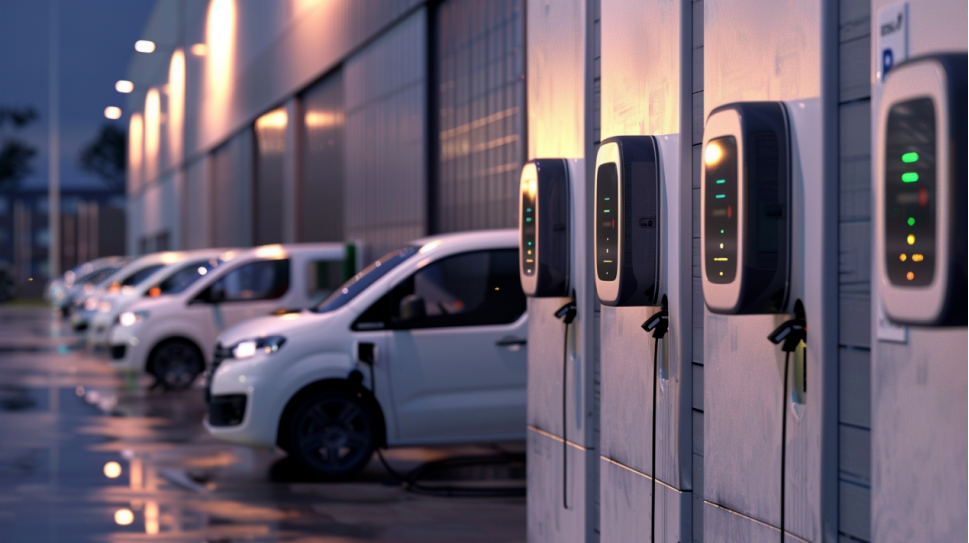
The Real Cost Challenge Behind Fleet Electrification
While electric vehicles offer lower fuel and maintenance costs, many fleets struggle with unexpected expenses after deployment. These challenges often include:
l Peak demand charges from unmanaged charging
l Underutilized charging assets
l Limited grid capacity at depots
l Inflexible charging schedules
In most cases, the issue is not the vehicles themselves, but the lack of properly designed ev charging solutions that align with fleet operations.
Why Fleet Charging Is Fundamentally Different from Public Charging
Fleet charging operates under very different conditions compared to public or residential charging:
l Vehicles return to fixed locations (depots, warehouses, yards)
l Charging occurs primarily overnight or during off-peak hours
l Predictable driving routes and energy demand patterns
l Strong emphasis on operational continuity and uptime
These characteristics make fleets particularly well suited for commercial AC charging, provided that charging is intelligently managed.
Optimized EV Charging Solutions: Key ROI Drivers
Load Management and Peak Shaving
Uncoordinated charging can overload electrical infrastructure and trigger expensive demand charges. Smart ev charging solutions enable:
l Dynamic load balancing across multiple vehicles
l Power distribution based on priority and departure schedules
l Avoidance of peak tariff windows
This alone can significantly reduce monthly electricity costs.
Maximizing Charger Utilization
Fleet operators often overinvest in hardware due to fear of downtime. Optimized charging systems allow:
l Fewer chargers to serve more vehicles
l Scheduled charging windows
l Higher asset utilization rates
Well-designed ev charging solutions focus on system efficiency, not charger quantity.
Infrastructure Scalability Without Grid Expansion
Grid upgrades are among the most expensive barriers to fleet electrification. AC-based ev charging solutions provide:
l Lower per-unit power demand
l Easier phased expansion
l Better compatibility with existing electrical infrastructure
This enables fleets to scale gradually while maintaining budget control.
Why AC Charging Is the Backbone of Fleet Operations
Despite the attention given to DC fast charging, most fleet use cases favor AC charging due to:
l Longer dwell times at depots
l Lower equipment and installation cost
l Reduced stress on electrical systems
l Higher reliability for overnight charging cycles
Wall-mounted AC chargers, combined with centralized energy management, form the foundation of cost-efficient fleet electrification.
Practical Deployment: Wall-Mounted and Portable Charging
Successful fleet charging deployments typically combine:
l Wall-mounted AC chargers
Ideal for permanent depot installations, offering durability, consistency, and scalability.
l Portable AC chargers
Useful for temporary locations, overflow demand, or transitional fleet expansion.
This hybrid approach provides operational flexibility while keeping capital expenditure under control.

Where QIAO Fits into Fleet EV Charging
QIAO specializes in B2B commercial AC ev charging solutions designed specifically for fleet, workplace, and operational environments. With a focus on reliability, energy efficiency, and scalable deployment, QIAO’s wall-mounted and portable AC chargers support fleet operators in:
l Reducing infrastructure investment risk
l Optimizing energy usage
l Ensuring consistent vehicle readiness
By aligning charging hardware with real operational needs, QIAO helps fleets turn electrification into a sustainable business model rather than a short-term compliance effort.
Conclusion: Charging Strategy Determines Fleet ROI
Fleet electrification success is not defined by how many vehicles are deployed, but by how effectively they are charged. Without optimized ev charging solutions, operational savings can quickly be eroded by energy inefficiency and infrastructure constraints.
For fleet operators aiming to maximize ROI, the priority should be clear:
invest in intelligent, scalable, and AC-focused charging infrastructure that matches real-world fleet behavior.