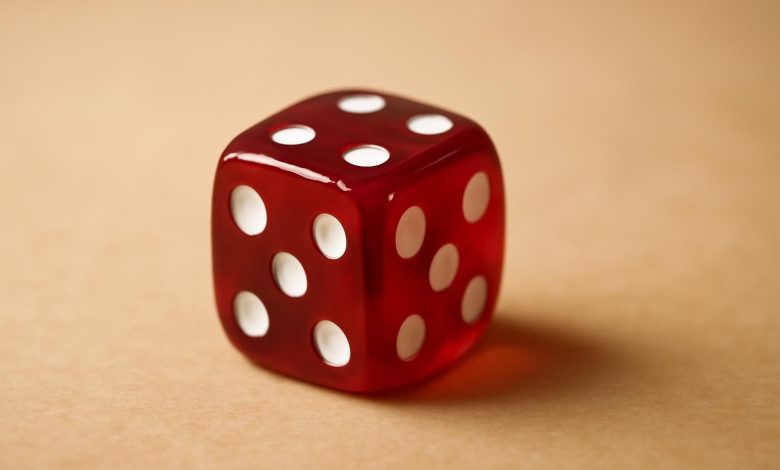
In the high-stakes world of gambling, few objects carry as much iconic weight, mathematical intrigue, and rigorous engineering as casino dice. While they might look like simple six-sided cubes at a casual glance, official casino dice—often referred to as precision dice—are marvels of micro-engineering. A single millimeter of variance or a fraction of a gram of imbalance can shift the house edge, costing a gaming establishment millions of dollars or compromising the integrity of the game.
Whether you are a tabletop gaming enthusiast, a curious craps player, a collector of casino memorabilia, or an SEO content researcher looking for deep insights into gambling equipment, understanding what separates standard board game dice from authentic casino dice reveals a fascinating intersection of physics, probability, and strict regulatory oversight.
What Are Casino Dice?
Casino dice are specialized six-sided polyhedrons (hexahedrons) manufactured to exact mathematical and physical tolerances for use in licensed gambling establishments. Unlike standard plastic dice found in retail board games like Monopoly or Yahtzee, casino dice are engineered to guarantee absolute randomness with every roll.
To achieve true random outcomes, every face of the die must have an identical probability (1/6, or roughly $16.67\%$) of landing face up. Casino dice achieve this through strict control over weight distribution, dimensional symmetry, surface flatness, and corner geometry.
Key Characteristics of Precision Casino Dice
- Razor-Sharp Edges: Standard retail dice have rounded or tumbled corners so they roll smoothly across cardboard boards. Casino dice feature sharp, unrounded edges and corners (often called “razor edges”) to ensure unpredictable bounces when hitting the textured rubber pyramid wall of a craps table.
- Flush Spots (Pips): On cheap dice, the dots (pips) are recessed indentations painted onto the surface. Because the six-side has six holes drilled out and the one-side has only one, the six-side is slightly lighter, causing the die to land on six more often. Casino dice solve this by drilling uniform holes, filling them with a paint of the exact same density as the cellulose acetate body, and machining the surface completely flush.
- Translucent Material: Authentic casino dice are almost always transparent or translucent (typically ruby red, though blue, green, and purple are also used). This transparency allows pit bosses and gaming inspectors to visually verify that there are no hidden weights, air bubbles, or internal tampering mechanisms inside the cube.
- Exact Dimensions: Standard casino craps dice measure 0.75 inches (19.05 mm) on each side, with a tolerance level of 0.0005 inches (five ten-thousandths of an inch)—roughly one-tenth the thickness of a human hair.
The History and Evolution of Casino Dice
Dice are among the oldest gaming implements known to humanity, dating back thousands of years before the rise of modern casinos.
Ancient Origins
Archaeological excavations have uncovered six-sided dice dating back to around 3000 BCE in Mesopotamia and the Indus Valley Civilization. Early dice were carved from animal knucklebones (specifically the astragalus of sheep or goats), ivory, wood, bone, and stone. Because natural materials lacked uniform density, ancient dice were inherently biased, though ancient players often attributed outcomes to divine intervention rather than physics.
The Birth of Precision Dice in the 20th Century
As organized gambling flourished in the United States during the early 20th century—particularly in riverboats, underground parlors, and eventually Las Vegas—cheating became a major concern. Crooked gamblers and unscrupulous operators regularly introduced “loaded” dice weighted with lead, mercury, or shaved edges.
To combat fraud and establish player trust, specialized manufacturers began developing precision machining techniques in the 1930s and 1940s. Using high-grade cellulose acetate and precision milling equipment, manufacturers created the modern transparent, flush-spot casino die. By the 1950s, Nevada gaming regulators mandated strict manufacturing standards, forever separating authentic casino dice from novelty items.
How Casino Dice Are Manufactured
The production of authentic casino dice is a meticulous, multi-stage process that resembles aerospace component manufacturing more than toy making.
1. Material Selection: Cellulose Acetate
Modern casino dice are made from cellulose acetate, a durable, optically clear thermoplastic derived from natural plant fibers. Cellulose acetate is chosen over cheaper acrylics or polystyrene because it offers superior dimensional stability, resists chipping under high-impact rolls, and maintains consistent density throughout the block.
2. Extrusion and Seasoning
The raw cellulose acetate is extruded into long square rods. Before cutting, these rods must undergo a “seasoning” or curing process that can last several months. Seasoning allows internal stresses and residual moisture to evaporate, preventing the dice from warping or shrinking after they are machined.
3. Precision Cutting and Milling
Once seasoned, the rods are sliced into rough cubes and passed through high-precision milling machines. Diamond-tipped cutting blades shave all six sides to exact dimensions within 0.0005 inches. Throughout this process, technicians use digital micrometers and optical comparators to verify perpendicularity—ensuring every angle is a true 90 degrees.
4. Drilling and Flush-Spot Filling
Next, shallow holes are drilled into each face to form the traditional pip patterns (arranged so that opposite faces always add up to seven: 1 opposite 6, 2 opposite 5, and 3 opposite 4).
To maintain perfect equilibrium:
- The holes are filled with a specialized white epoxy paint formulated to match the exact specific gravity of the surrounding cellulose acetate.
- Once the paint cures, the faces are milled and polished again, shaving away excess paint so the pips sit completely flush with the surface. If you run your fingernail across an authentic casino die, you will not feel the dots.
5. Security Markings and Serialization
Before leaving the factory, casino dice receive custom anti-counterfeiting features ordered by the specific gaming establishment:
- Custom Logos: Usually printed on the “ace” (1-pip) or “six” face.
- Serial Numbers: Alphanumeric codes stamped across multiple faces so stickmen can verify that all dice in a bowl belong to the same matched set.
- UV/Invisible Ink: Many modern casinos incorporate ultraviolet-reactive markings that glow under blacklight inspections at the table.
- Key Letters or Monograms: Specific font styles or hidden micro-dots known only to casino security personnel.
Casino Dice vs. Regular Board Game Dice
Many casual players assume all six-sided dice perform similarly. In reality, the differences between casino dice and retail dice dramatically impact probability and fairness.
Feature
Authentic Casino Dice
Standard Retail / Board Game Dice
Material
High-grade translucent cellulose acetate
Opaque urea-formaldehyde, acrylic, or injection-molded plastic
Dimensional Tolerance
0.0005 inches (extreme precision)
0.01 to 0.05 inches (high variance)
Edges & Corners
Razor-sharp, 90-degree square corners
Rounded or tumbled edges
Pips (Dots)
Drilled and filled flush with density-matched paint
Recessed/indented or surface-printed
Transparency
Transparent/translucent for internal inspection
Typically opaque
Security Features
Serial numbers, casino logos, UV markings
None
Lifespan on Table
Usually 4 to 8 hours of active play
Indefinite
Popular Casino Games That Use Casino Dice
While dozens of dice games exist globally, only a select few rely on precision casino dice in regulated brick-and-mortar establishments.
1. Craps
Craps is the undisputed king of casino dice games. Played with two precision dice on a large, high-walled felt table, craps pits players against the house (and occasionally each other) on the outcome of rolls.
- The Come-Out Roll: Rolling a 7 or 11 wins immediately for Pass Line bettors, while 2, 3, or 12 (“craps”) loses. Rolling a 4, 5, 6, 8, 9, or 10 establishes the “Point.”
- Why Precision Matters: Because craps features dozens of multi-roll and single-roll proposition bets with razor-thin house edges (as low as $1.36\%$ on the Don’t Pass bet), even a $0.5\%$ physical bias in a die could allow advantage players to exploit the table.
2. Sic Bo
Originating in ancient China and hugely popular in Macau and Asian gaming markets, Sic Bo (meaning “precious dice”) uses three casino dice shaken inside a mechanical cage or glass dome. Players wager on the total sum of the three dice, specific single numbers, doubles, or triples. Because the dealer never touches the dice directly, mechanical shakers paired with precision dice guarantee impartial outcomes.
3. Pai Gow (Tile and Dice Hybrid)
In traditional Pai Gow, three dice are shaken in a covered cup to determine which player receives the first set of domino-like tiles. While the dice do not directly decide payouts, precision dice ensure fair seating rotation and prevent manipulation of tile distribution.
4. Klondike and Bank Craps Variations
Regional casinos and historical gaming halls also feature variations like Crapless Craps, Street Craps (regulated versions), and Klondike, all of which mandate precision-grade dice to comply with state or national gaming commissions.
Casino Security, Table Rules, and Dice Etiquette
Because dice are physically handled by players in craps, casinos enforce strict security protocols and table etiquette to prevent tampering or “dice sliding.”
How Dealers Inspect Dice
At a craps table, the stickman manages the dice using a long, curved wooden or composite stick. At the start of every shift—and whenever a die leaves the table—the stickman and boxperson perform a rapid visual and tactile inspection:
- Checking serial numbers to confirm the dice match the active set.
- Inspecting corners for nicks, chips, or flattening.
- Verifying that the pips and logos show no signs of scratching or chemical alteration.
Strict Player Rules at the Table
If you step up to a live craps table as the shooter, following proper etiquette keeps the game moving and avoids warnings from the pit crew:
- Use One Hand Only: You must pick up and throw the dice using only one hand. Switching hands mid-roll can look like a sleight-of-hand swap (“switching in” loaded dice).
- Keep Dice Above the Table: Never lower your hand below the table rail or cup the dice out of the boxperson’s line of sight.
- Hit the Back Wall: Both dice must travel the length of the table and bounce off the textured rubber pyramid wall at the opposite end. Short rolls (“sliding”) are immediately called “no roll” by the boxperson to prevent controlled-throw cheating.
- Watch Your Hands: Keep hands clear of the landing zone when another shooter is throwing. If a flying die hits your hands, it disrupts the natural bounce.
Famous Cheating Scams Involving Casino Dice
The strict rules surrounding modern casino dice exist because of historical cheating methods engineered to beat the house.
Loaded and Weighted Dice
Cheaters historically drilled out pips on one side and inserted tiny weights made of lead, gold, or platinum before repainting the dots. Another variant used hollow chambers filled with mercury, which could be shifted by tapping the die on the table before a throw, forcing specific numbers to land upward.
Shaved Dice (“Flats”)
By subtly sanding down one face of a die by just a few thousandths of an inch, a cheater alters the center of gravity and surface area, increasing the likelihood that the die lands on the shaved side (or its opposite). Modern micrometer checks catch shaved dice immediately.
Top-and-Bottoms (“Mis-Spotted” Dice)
Mis-spotted dice omit certain numbers altogether—for example, placing two 5s and two 2s on a single die while omitting the 1 and 6. Since a player can only ever see three sides of a cube simultaneously from any angle, casual observers often miss the missing numbers. Today, casinos train dealers to inspect opposite faces rapidly to ensure every pair sums to seven.
Dice Sliding and Controlled Shooting
In dice sliding, a skilled cheater slides one or both dice smoothly across the felt without letting them tumble, keeping the desired numbers facing up. The textured pyramid wall at the end of every craps table was invented specifically to disrupt sliding dice and force a random bounce.
What Happens to Used Casino Dice?
Authentic casino dice live surprisingly short lives on the gaming floor. Because sharp corners wear down slightly after hundreds of impacts against the table wall, casinos retire active dice every 4 to 8 hours—or immediately if a die flies off the table onto the floor.
Once retired, casinos follow strict disposal procedures so decommissioned dice cannot be snuck back onto a live table:
- Cancellation Marks: Retired dice are punched with a small circular indentation (“drill mark” or “cancel mark”) on one face, stamped with a cancellation symbol, or lightly sanded on one corner.
- Gift Shop Souvenirs: Cancelled casino dice are packaged and sold in casino gift shops as popular, affordable souvenirs and collectibles.
- Destruction: Dice damaged during play or suspected of tampering are logged by security and permanently destroyed.
Frequently Asked Questions (FAQs)
1. Why are casino dice transparent?
Casino dice are transparent or translucent so pit bosses, dealers, and gaming regulators can clearly see through the cube. Transparency makes it impossible to hide internal weights, air pockets, mercury chambers, or magnetic inserts inside the die without immediate visual detection.
2. Why are casino dice usually red?
While casinos use blue, green, purple, and amber dice, ruby red is the industry standard because it provides the highest visual contrast against green and blue craps felt. High contrast makes it easier for surveillance cameras (“the eye in the sky”) and table supervisors to read the white pips clearly from a distance.
3. Are casino dice truly 100% balanced?
No physical object in the real world is mathematically 100% flawless, but casino dice come remarkably close. Manufactured to tolerances of 0.0005 inches with density-matched flush pips, any microscopic variance in authentic casino dice is statistically negligible over millions of rolls.
4. Can you buy authentic used casino dice?
Yes. Nearly every major casino in Las Vegas, Atlantic City, and Macau sells cancelled casino dice in their gift shops or online through memorabilia retailers. Authentic used casino dice will always feature a small drill hole, stamp, or mark indicating they have been retired from live play.
5. What size are standard casino dice?
Standard casino craps dice measure 0.75 inches (19 mm) per side. Occasionally, casinos use slightly smaller 0.625-inch (16 mm) dice for certain table games or promotional events, though 19 mm remains the universal benchmark for craps.
6. How long do casino dice stay in play before being replaced?
In a busy casino, a set of dice typically stays on the craps table for 4 to 8 hours (usually one dealer shift) before being retired and replaced with a fresh, sealed “stick” of five matching dice.
Conclusion
Far more than simple gaming tokens, casino dice represent a triumph of precision manufacturing, probability theory, and security engineering. From their origins in ancient knucklebones to today’s serialized, razor-edged cellulose acetate cubes, every detail of a casino die is purpose-built to eliminate bias and protect the integrity of chance. Whether you are placing a Pass Line bet at a bustling Las Vegas craps table or examining a cancelled souvenir die on your desk, knowing the science behind those six flush-spotted faces adds a whole new layer of appreciation to every roll.