Key Takeaways
The term third-party administrator can describe different services, so employers should confirm exactly which responsibilities a provider will handle.
A benefits administrator may support COBRA, Health Savings Accounts, Flexible Spending Accounts, Health Reimbursement Arrangements, and related compliance processes.
Outsourcing administration does not transfer every legal responsibility away from the employer or plan administrator.
COBRA administration depends on accurate information and timely communication between the employer, administrator, insurer, and qualified beneficiaries.
HSA eligibility is determined by federal requirements, including enrollment in an HSA-eligible high-deductible health plan.
FSA and HRA rules differ from HSA rules, so employees need clear information about eligibility, reimbursements, deadlines, and account ownership.
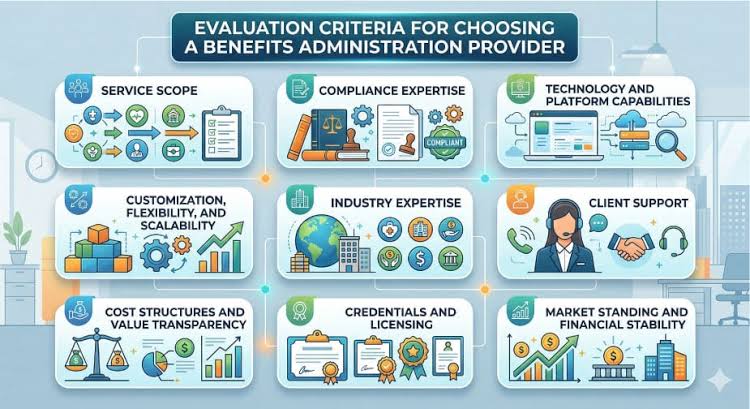
Employers should evaluate technology, service standards, data protection, implementation responsibilities, and fees before selecting an administrator.
Why Employers Use Third-Party Benefits Administrators
Defining the Scope of Administration
A third-party administrator, commonly called a TPA, performs specified administrative functions on behalf of an employer or employee benefit plan. The exact responsibilities depend on the provider and the service agreement.
Some TPAs process medical claims for self-funded health plans. Others focus on consumer-directed benefit accounts, continuation coverage, compliance support, or participant communications.
Proficient Benefit Solutions focuses on services that include:
- Health Savings Accounts
- Flexible Spending Accounts
- Health Reimbursement Arrangements
- COBRA and retiree billing
- Premium Only Plans
- ERISA wrap documents
- Nondiscrimination testing
- Form 5500 reporting support
Employers should not assume that every TPA provides all these services or administers the underlying medical plan. The contract should clearly identify which tasks belong to the provider and which remain with the employer, broker, insurer, or another vendor.
Evaluating Administrative Costs
Outsourcing may reduce the amount of routine work handled internally, but savings are not guaranteed. The financial effect depends on the organization’s size, plan design, current staffing, service requirements, and vendor fees.
The original claim that outsourcing produces savings of 20% or more cannot be applied to every employer without supporting data. A better comparison considers the full cost of each option.
An employer may review:
- Implementation fees
- Per-participant charges
- Transaction or account fees
- Technology costs
- Internal staff time
- Required compliance work
- Fees for additional reports or services
- Contract renewal provisions
Cost should be evaluated alongside accuracy, participant support, and the ability to meet required deadlines. The lowest-priced option may not provide the service level or administrative controls the organization needs.
Matching Expertise to the Benefits Program
Benefits administration involves tax rules, plan documents, participant notices, reimbursement procedures, and recordkeeping. A provider’s experience should match the specific accounts and services being offered.
Organizations comparing a third party administrator health insurance arrangement should first confirm whether the provider administers medical claims, benefit accounts, COBRA, or a combination of services. Proficient Benefit Solutions primarily describes itself as an administrator of consumer-directed health accounts and related benefit-compliance services.
Employers can ask prospective administrators about staff training and escalation procedures. They should also review how regulatory updates are communicated and how the provider coordinates with other vendors.
A TPA can assist with technical administration, but employers may still need legal, tax, accounting, or benefits-consulting advice for decisions outside the administrator’s role.
Understanding COBRA, HSA, FSA, and HRA Services
Coordinating COBRA Administration
COBRA may allow certain employees and family members to continue group health coverage after qualifying events such as employment termination, reduced work hours, divorce, or the loss of dependent status.
The U.S. Department of Labor explains:
“COBRA is a federal law that allows workers and their families to temporarily keep their health coverage in certain situations.”
COBRA administration may involve general notices, election notices, premium billing, payment tracking, and communication with the health plan. Deadlines vary according to the notice, qualifying event, and the parties responsible for reporting it.
An outside administrator may prepare and distribute notices based on information supplied by the employer. If the employer reports an event late or provides incorrect participant data, the administrator may not be able to complete its task correctly.
The service agreement should explain:
- How qualifying events are submitted
- Who verifies participant information
- Which notices the administrator sends
- How premiums are collected
- How reinstatement is coordinated
- What reports the employer receives
- How errors and appeals are handled
Some employers and plans are not subject to federal COBRA, but state continuation laws may apply. The applicable requirements should be reviewed with qualified advisers.
Administering Health Savings Accounts
An HSA is owned by the eligible individual. Contributions may be made by the employee, employer, or another person, subject to federal limits and eligibility rules.
To be eligible to contribute, a person generally must be covered by an HSA-eligible high-deductible health plan. The person must also satisfy other requirements concerning additional health coverage, Medicare enrollment, and dependent status.
HSA funds can be used for qualified medical expenses. Unused money generally remains in the account and can continue to be available in future years. Because the account belongs to the individual, it remains with that person after an employment change.
A benefits administrator may support enrollment and contribution processing. It may also provide account access, reimbursement tools, participant materials, and transaction reporting.
Employers should avoid describing every high-deductible health plan as HSA eligible. The plan must satisfy applicable federal requirements for the relevant year.
Distinguishing FSAs and HRAs From HSAs
An FSA is generally an employer-established arrangement that allows employees to receive reimbursement for qualified expenses. Employees may make salary-reduction contributions when permitted by the plan.
Health FSAs are commonly subject to a use-it-or-lose-it rule. However, a plan may permit either a limited carryover or a grace period when federal rules allow it. Employees should review the terms of their specific plan instead of assuming unused funds will remain available.
An HRA is funded by the employer. Reimbursements and any permitted rollover depend on the plan document and applicable federal requirements. Employees do not own an HRA in the same way they own an HSA.
TPA services for these arrangements may include claims review, reimbursement processing, debit-card administration, participant portals, and reporting. Employers should confirm the administrator’s procedures for substantiating expenses and resolving denied claims.
Managing Compliance Responsibilities
Recognizing That Compliance Is Shared
Hiring a TPA does not automatically transfer all responsibility for a benefit plan. Employers and plan fiduciaries may retain duties even when administrative work is outsourced.
The contract should identify which party is responsible for notices, filings, plan documents, participant data, and compliance testing. It should also explain how the parties will coordinate when a deadline or regulatory issue arises.
Statements that a TPA “ensures compliance” should be treated carefully. An administrator can provide processes and support, but compliant operation may still depend on accurate employer information, appropriate plan design, and timely decisions.
Employers should ask whether the administrator provides legal or tax advice. Many TPAs offer administrative assistance while recommending that clients consult their own counsel for formal interpretations.
Monitoring Regulatory Changes
Employee-benefit requirements can change through legislation, agency guidance, annual contribution limits, and court decisions. State laws may also affect certain plans or continuation-coverage obligations.
A prospective administrator should be able to explain how it monitors changes relevant to its services. Employers may ask how updates are communicated and whether system changes or plan amendments are included in the standard fee.
Annual updates can affect contribution limits and other plan provisions. Employers should verify current figures before preparing enrollment materials or payroll settings.
Compliance updates should be reviewed by the appropriate adviser when they affect plan design or an employer’s legal obligations. A vendor notice can provide useful information, but it may not address every circumstance.
Protecting Benefits and Participant Data
Benefits administration requires the exchange of sensitive personal and financial information. Employers should evaluate how a provider receives, stores, uses, and protects that data.
A security review may address:
- User authentication
- Access controls
- Data encryption
- Secure file transfers
- Incident-response procedures
- Vendor oversight
- Data-retention practices
- Employee training
- Cybersecurity insurance
- Breach-notification responsibilities
The parties should also determine which privacy and security laws apply to the services. HIPAA requirements may apply in some arrangements, while other information may be governed by separate federal or state rules.
Technology can improve access and reporting, but it should not be evaluated only by appearance. Employers should test common workflows and ask how participants receive help when an online process does not work.
Building a Practical Administrator Relationship
Planning the Implementation
Moving benefit administration to a new provider requires accurate data and clear deadlines. The implementation plan should identify the accounts being transferred, employee groups affected, and information required from existing vendors.
Employers may need to coordinate payroll deductions, account balances, participant elections, and outstanding claims. COBRA participants and pending qualifying events may also require special attention.
Before launch, the employer should understand:
- Who manages each implementation task
- Which files must be provided
- How data will be validated
- When participant communications will be sent
- Whether a service interruption is expected
- How unresolved claims will be handled
- Who approves the final setup
An implementation schedule can take several weeks or longer, depending on the number of plans and the quality of available data. Employers should not rely on a universal timeline.
Establishing Service Expectations
Service expectations should be documented before the agreement is signed. General assurances of responsive support are difficult to evaluate unless they are connected to measurable standards.
Employers may ask about:
- Customer-service hours
- Average response targets
- Claims-processing procedures
- Escalation contacts
- Reporting frequency
- Participant-language support
- Accessibility accommodations
- System maintenance notifications
Proficient Benefit Solutions states that its services include employer and participant portals, account reporting, participant alerts, and customer-service support. Employers should confirm which features are included with the specific service package they are considering.
Participant education should also be discussed. Account rules can be confusing, particularly when employees must distinguish among an HSA, FSA, and HRA. Clear materials may help employees understand contribution limits, eligible expenses, documentation requirements, and deadlines.
Reviewing the Relationship Over Time
A TPA arrangement should be reviewed periodically. Changes in workforce size, plan design, and employee needs may affect whether the current service remains appropriate.
A regular review can examine service reports and unresolved issues. Employers can also consider participant feedback and upcoming plan changes.
The review should not assume that long tenure automatically means satisfactory performance. It should focus on whether the administrator continues to meet the responsibilities stated in the agreement.
Before renewing, the employer should examine pricing changes, contract terms, data-transfer provisions, and termination requirements. It should also understand how participant records and account information would be transferred if the relationship ended.
FAQ
What is a third-party benefits administrator?
A third-party benefits administrator performs specified administrative services for an employer or benefit plan. Its role may include account administration, participant support, COBRA billing, or compliance-related services. The scope depends on the provider and contract.
Does a TPA provide health insurance?
Not necessarily. Some TPAs process claims for self-funded medical plans, but others administer benefit accounts or COBRA services. The employer should confirm whether the provider administers insurance claims, consumer-directed accounts, or only selected functions.
Can an employer eliminate compliance risk by hiring a TPA?
No. A TPA can support compliance processes, but employers and plan administrators may retain legal duties. The division of responsibilities should be documented and reviewed with qualified advisers.
What is the difference between an HSA and an FSA?
An HSA is owned by an eligible individual and generally requires coverage under an HSA-eligible high-deductible health plan. An FSA is an employer-established arrangement governed by the plan’s terms and applicable federal rules.
Who owns the money in an HSA?
The eligible individual owns the HSA. Employer contributions become the individual’s property and generally remain in the account after the person changes jobs.
Does every FSA allow unused funds to carry over?
No. A health FSA may offer a permitted carryover or a grace period, but it generally cannot offer both. Some plans offer neither. Employees should review their plan documents for the applicable rule.
What should employers ask about COBRA administration?
Employers should ask how qualifying events are reported and which notices the TPA sends. They should also review premium collection, reporting, state continuation support, error correction, and escalation procedures.
How should an employer compare TPA proposals?
Proposals should be compared using the same service scope. Employers should review fees, implementation support, technology, participant service, data security, contract terms, and the responsibilities that remain with the employer.
Useful Resources
- U.S. Department of Labor COBRA Continuation Coverage
- Department of Labor COBRA FAQs for Employers
- IRS Publication 969: Health Savings Accounts and Other Tax-Favored Health Plans
- IRS Employer’s Tax Guide to Fringe Benefits
- Department of Labor Employee Benefits Security Administration
- HealthCare.gov COBRA Coverage Information