In advanced manufacturing and high-temperature environments, material choice directly affects performance, safety, and longevity. Among specialized materials, fused quartz stands out for its unique combination of purity, thermal resistance, and optical clarity. It is widely used in industries ranging from semiconductors to aerospace, where standard glass or ceramics simply cannot meet the required specifications.
Understanding fused quartz involves more than just its composition. Its structure, behavior under extreme conditions, and range of applications make it a critical material in modern engineering and technology.
What Is Fused Quartz?
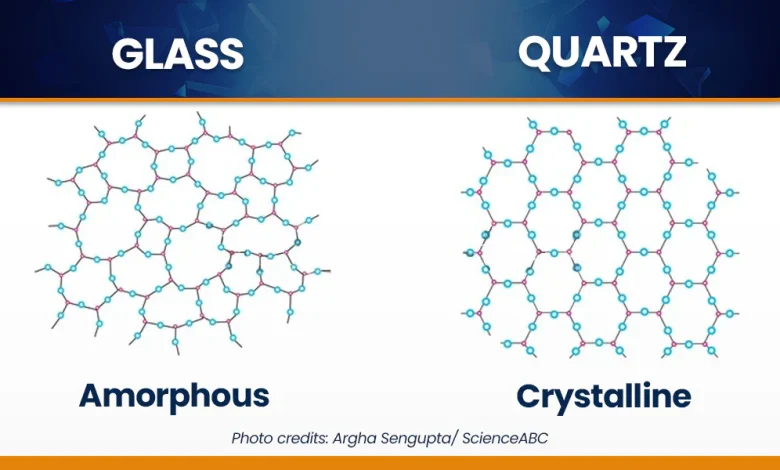
Fused quartz is a type of glass made from high-purity silicon dioxide (SiO₂). Unlike standard glass, which contains various additives, fused quartz is manufactured by melting pure silica at extremely high temperatures and then cooling it into a solid form.
This process results in a non-crystalline, amorphous material with exceptional thermal and optical properties. Because it lacks impurities, fused quartz performs consistently even in demanding environments.
It is often confused with fused silica. While the terms are sometimes used interchangeably, fused silica typically refers to synthetic forms, whereas fused quartz may be derived from natural quartz crystals.
Why Fused Quartz Is Unique
The performance of fused quartz comes from its structure and purity. Without the additives found in conventional glass, it exhibits properties that are difficult to replicate.
Key characteristics include:
- High thermal resistance
- Low thermal expansion
- Excellent optical transparency
- Strong chemical resistance
- Electrical insulation capabilities
These properties make fused quartz suitable for applications where precision and durability are essential.
Core Properties of Fused Quartz
Thermal Stability
One of the most important advantages of fused quartz is its ability to withstand extreme temperatures. It can operate continuously at temperatures above 1,000°C without losing structural integrity.
Additionally, its low coefficient of thermal expansion means it resists cracking when exposed to rapid temperature changes. This makes it ideal for environments involving thermal cycling.
Optical Clarity
Fused quartz transmits a wide range of light wavelengths, including ultraviolet (UV), visible, and infrared. This makes it valuable in optical systems, scientific instruments, and lighting applications.
Its clarity also ensures minimal distortion, which is critical in precision equipment.
Chemical Resistance
Fused quartz is highly resistant to most chemicals, including acids and solvents. This property is particularly useful in laboratory and industrial settings where materials are exposed to corrosive substances.
Electrical Insulation
Due to its purity and structure, fused quartz acts as an effective electrical insulator. This makes it suitable for use in high-voltage and high-frequency applications.
Applications of Fused Quartz
Semiconductor Manufacturing
Fused quartz is widely used in semiconductor production, where precision and contamination control are critical. It is used in components such as wafer carriers, tubes, and processing chambers.
The global semiconductor industry relies heavily on materials like fused quartz to maintain the purity and performance of electronic components.
Lighting and UV Applications
Quartz glass is commonly used in high-intensity lighting systems, including UV lamps and halogen bulbs. Its ability to withstand high temperatures and transmit UV light makes it ideal for these applications.
Laboratory Equipment
In scientific research, fused quartz is used to create labware such as crucibles, tubes, and optical components. Its resistance to heat and chemicals ensures reliable performance in controlled experiments.
Aerospace and Defense
Fused quartz is used in aerospace applications where materials must endure extreme conditions. Its thermal stability and strength make it suitable for windows, sensors, and protective components.
Telecommunications and Optics
Fiber optics and advanced communication systems often rely on high-purity silica materials. Fused quartz plays a role in maintaining signal clarity and performance.
Benefits and Real-World Impact
Consistent Performance in Extreme Conditions
Fused quartz maintains its properties under high temperatures, rapid temperature changes, and exposure to chemicals. This reliability reduces the risk of material failure.
Long Service Life
Due to its durability, fused quartz components often last longer than alternatives. This can lower maintenance costs and reduce downtime in industrial operations.
Precision and Accuracy
In industries where even small variations can affect outcomes, the stability of fused quartz supports consistent results.
Challenges and Limitations
High Production Cost
The process of creating fused quartz requires extremely high temperatures and controlled conditions. This contributes to higher costs compared to standard glass.
Brittleness
Despite its strength in certain conditions, fused quartz can be brittle and may break under mechanical stress or impact.
Machining Difficulty
Working with fused quartz requires specialized tools and techniques. Its hardness and brittleness make shaping and finishing more complex.
Expert Insight: Why Purity Drives Performance
One of the key reasons fused quartz performs so well is its purity. In many industrial applications, even trace contaminants can affect outcomes.
For example, in semiconductor manufacturing, impurities can interfere with electrical properties and reduce product quality. Fused quartz minimizes this risk by providing a stable, uncontaminated material.
This focus on purity reflects a broader trend in advanced manufacturing, where material quality directly influences performance and efficiency.
Industry Trends and Future Outlook
Growth in Semiconductor Demand
As demand for electronics continues to rise, the need for high-performance materials like fused quartz is expected to grow. The semiconductor industry alone is projected to reach over $1 trillion in value by the next decade.
Advancements in Optical Technology
New developments in optics and photonics are expanding the use of fused quartz in areas such as laser systems and medical devices.
Sustainability Considerations
Manufacturers are exploring ways to improve production efficiency and reduce environmental impact. Recycling and material optimization are becoming more important.
Practical Considerations for Use
When selecting fused quartz for an application, it is important to consider:
- Operating temperature requirements
- Exposure to chemicals or radiation
- Mechanical stress conditions
- Cost and budget constraints
Choosing the right grade and form of fused quartz ensures optimal performance.
Conclusion
Fused quartz is a high-performance material that plays a critical role in modern technology and industry. Its combination of thermal stability, optical clarity, and chemical resistance makes it indispensable in demanding environments.
While it comes with certain challenges, such as cost and brittleness, its benefits often outweigh these limitations in applications where reliability and precision are essential. As industries continue to evolve, fused quartz will remain a key material supporting innovation and advanced manufacturing.